
Ryzen AI Max+ 395 vs Apple M4 Pro: Which AI PC Platform Is Better for Local AI in 2026?
Local AI is becoming one of the biggest trends in personal computing. Instead of sending every task to cloud services, more users are looking for computers that can run AI models locally with better privacy, lower latency, and more control.
Two new-generation platforms represent different approaches to AI computing:
- AMD Ryzen AI Max+ 395 (Strix Halo) — focused on high-performance AI computing, powerful integrated graphics, and large memory capacity
- Apple M4 Pro — focused on energy efficiency, software optimization, and a tightly integrated ecosystem
Both combine CPU, GPU, and AI acceleration into a single chip design. However, their priorities are different.
For users interested in local AI, AI development, or AI Mini PCs, the key question is: Is Ryzen AI Max+ 395 or Apple M4 Pro the better platform for running AI locally?
Quick Verdict: Ryzen AI Max+ 395 or Apple M4 Pro?
There is no universal winner because these two platforms target different users.
Choose Ryzen AI Max+ 395 if you need:
- Larger local AI models
- Higher memory capacity (up to 128GB)
- AI development flexibility
- Windows/Linux compatibility
- A powerful AI Mini PC
Choose Apple M4 Pro if you need:
- macOS ecosystem
- Excellent energy efficiency (40W TDP)
- Creative applications
- Optimized professional workflows
The biggest advantage of Ryzen AI Max+ 395 is its combination of Zen 5 CPU architecture, Radeon 8060S integrated GPU, XDNA 2 AI accelerator, and up to 128GB LPDDR5X unified memory. This makes it especially attractive for users who want a compact AI workstation.
Apple M4 Pro remains one of the strongest options for users who value a polished software experience and efficient performance.
Ryzen AI Max+ 395 vs Apple M4 Pro: Key Hardware Differences
For traditional PCs, many users compare CPU benchmark scores first. However, local AI workloads are different. When running AI models, the most important factors are:
- Memory capacity — determines which models you can load
- GPU acceleration — affects inference speed
- Software compatibility — determines which frameworks work
- AI framework support — ROCm vs Metal vs CUDA ecosystem
A faster CPU does not always mean better AI performance if the system cannot load larger models.
Hardware Specification Comparison
| Specification | Ryzen AI Max+ 395 | Apple M4 Pro |
|---|---|---|
| Architecture | AMD Zen 5 | Apple Silicon |
| CPU Cores | 16 cores | 14 cores |
| Threads | 32 threads | 14 threads |
| Max Boost Clock | 5.1 GHz | 4.5 GHz |
| Base Clock | 3.0 GHz | — |
| Process Technology | 4nm (TSMC FinFET) | 3nm |
| L2 Cache | 1 MB per core | — |
| L3 Cache | 64 MB shared | — |
| Integrated GPU | Radeon 8060S | Apple M4 20-core GPU |
| AI Accelerator | XDNA 2 NPU (50 TOPS) | Neural Engine |
| Total AI Performance | Up to 126 TOPS | — |
| Memory Architecture | Unified Memory (LPDDR5X) | Unified Memory |
| Maximum Memory | Up to 128GB | Up to 64GB |
| TDP | 55W (cTDP 45–120W) | 40W |
Sources: AMD official specifications; Technical City comparison.
Why Strix Halo 128GB Matters for Local AI
One of the biggest differences between Ryzen AI Max+ 395 and Apple M4 Pro is memory capacity. For local AI workloads, memory is often the first limitation users encounter.
Large language models require memory for:
- Model parameters
- Context processing
- Runtime operations
- Multiple AI applications
A powerful processor cannot run a model that exceeds available memory.
Memory Capacity and AI Model Support
| Platform | Max Unified Memory | Impact on Local AI |
|---|---|---|
| Ryzen AI Max+ 395 | 128GB LPDDR5X | Can support larger local AI models, longer context windows, and multiple concurrent AI workloads |
| Apple M4 Pro | 64GB Unified Memory | Well-suited for smaller AI workloads; may require more aggressive quantization for larger models |
For AI users, the 128GB option is one of the most important advantages of the Strix Halo platform. It allows more flexibility for local LLMs, AI coding assistants, AI agents, and image generation workflows. This is also why Strix Halo 128GB Mini PCs have attracted attention among AI enthusiasts.
LLM Inference: What Models Can Each Platform Run?

For users interested in running large language models locally, the amount of available memory is often the deciding factor. The following table shows how each platform handles common LLM workloads based on hardware capacity.
| Model | Ryzen AI Max+ 395 (128GB) | Apple M4 Pro (64GB) |
|---|---|---|
| Llama 3.1 8B | Comfortably supported | Comfortably supported |
| Llama 3.1 70B (Q4 quantized) | Better fit with 128GB unified memory | Limited by 64GB ceiling; may require lower quantization or smaller context |
| Code Llama 34B | Better memory headroom for development workflows | Possible depending on quantization level and context length |
| Mistral 7B / Mixtral 8x7B | Supported with room for multiple models | 7B supported; Mixtral 8x7B may need optimization |
| Phi-3 Medium (14B) | Supported with full context | Supported with moderate context |
CPU Performance: Apple M4 Pro vs Ryzen AI Max+ 395
CPU benchmark results show that both platforms are extremely capable, but they have different strengths. Results vary across different benchmarks, and no single test can fully represent real-world AI performance.
Third-Party CPU Benchmark Comparison
| Benchmark | Apple M4 Pro 14-Core | Ryzen AI Max+ 395 | Difference |
|---|---|---|---|
| PassMark CPU Mark | 37,977 | 55,036 | AMD leads by ~45% |
| Geekbench 6.4 Multi-Core | 22,527 | 21,269 | Apple leads by ~6% |
| CrossMark Overall | 2,155 | 2,274 | AMD leads by ~6% |
| WebXPRT 4 Overall | 345 | 317 | Apple leads by ~9% |
Source: Aggregated third-party benchmark data from Technical City. Results may vary depending on system configuration, cooling, and memory setup.
In PassMark multi-core testing, Ryzen AI Max+ 395 shows a significant advantage, reflecting its higher core count and thread count. However, Apple M4 Pro leads in Geekbench 6.4 multi-core and WebXPRT 4, suggesting stronger per-core efficiency in certain workloads.
The important point is that CPU benchmark results do not fully represent local AI performance. For AI workloads, GPU capability and memory capacity often have a greater impact than raw CPU speed.
Power Consumption: A Key Difference for Mini PCs
For Mini PC users, power consumption directly affects cooling requirements, noise levels, and electricity costs.
TDP and Power Comparison
| Power Metric | Apple M4 Pro | Ryzen AI Max+ 395 |
|---|---|---|
| Default TDP | 40W | 55W |
| Configurable TDP Range | — | 45W – 120W |
Sources: AMD official specifications (cTDP 45–120W); Technical City (40W vs 55W default TDP).
Apple M4 Pro has a lower rated power envelope, which may help reduce heat output and noise in compact systems. Ryzen AI Max+ 395 at its default 55W already has a higher thermal design point, and many Mini PC manufacturers configure it at higher power levels (up to 120W) to maximize performance. This means Strix Halo Mini PCs typically need more robust cooling solutions.
However, for local AI workloads, the additional power budget often translates into the ability to run larger models and handle more demanding tasks — a trade-off many AI enthusiasts are willing to make.
GPU Performance: Radeon 8060S vs Apple GPU
GPU performance is one of the most significant differences between these two platforms. AI workloads such as local LLM inference, Stable Diffusion, AI video generation, and GPU-accelerated applications often benefit heavily from GPU resources.
GPU Comparison
| GPU Feature | Ryzen AI Max+ 395 | Apple M4 Pro |
|---|---|---|
| Integrated GPU | Radeon 8060S | Apple M4 20-core GPU |
| Architecture | RDNA 3.5 | Apple GPU Architecture |
| Main Strength | Compute flexibility, OpenCL | Metal optimization |
| AI Framework Support | ROCm, OpenCL, DirectML | Metal, Core ML |
| Target Users | AI PC / Gaming / Development | Creative professionals |
GPU benchmark comparison: Technical City — Radeon 8060S vs Apple M4 20-core GPU.
Radeon 8060S represents one of the strongest integrated GPU solutions currently available on an x86 platform. It provides enough graphics capability for users to build a compact AI PC without requiring a separate discrete GPU. This makes Ryzen AI Max+ 395 especially interesting for AMD Strix Halo Mini PC designs where space and power budget are limited.
Apple M4 Pro's GPU, meanwhile, benefits from deep Metal optimization in macOS, which can deliver strong performance in applications specifically built for Apple Silicon.
ACEMAGIC Fits Into the AI Mini PC Market
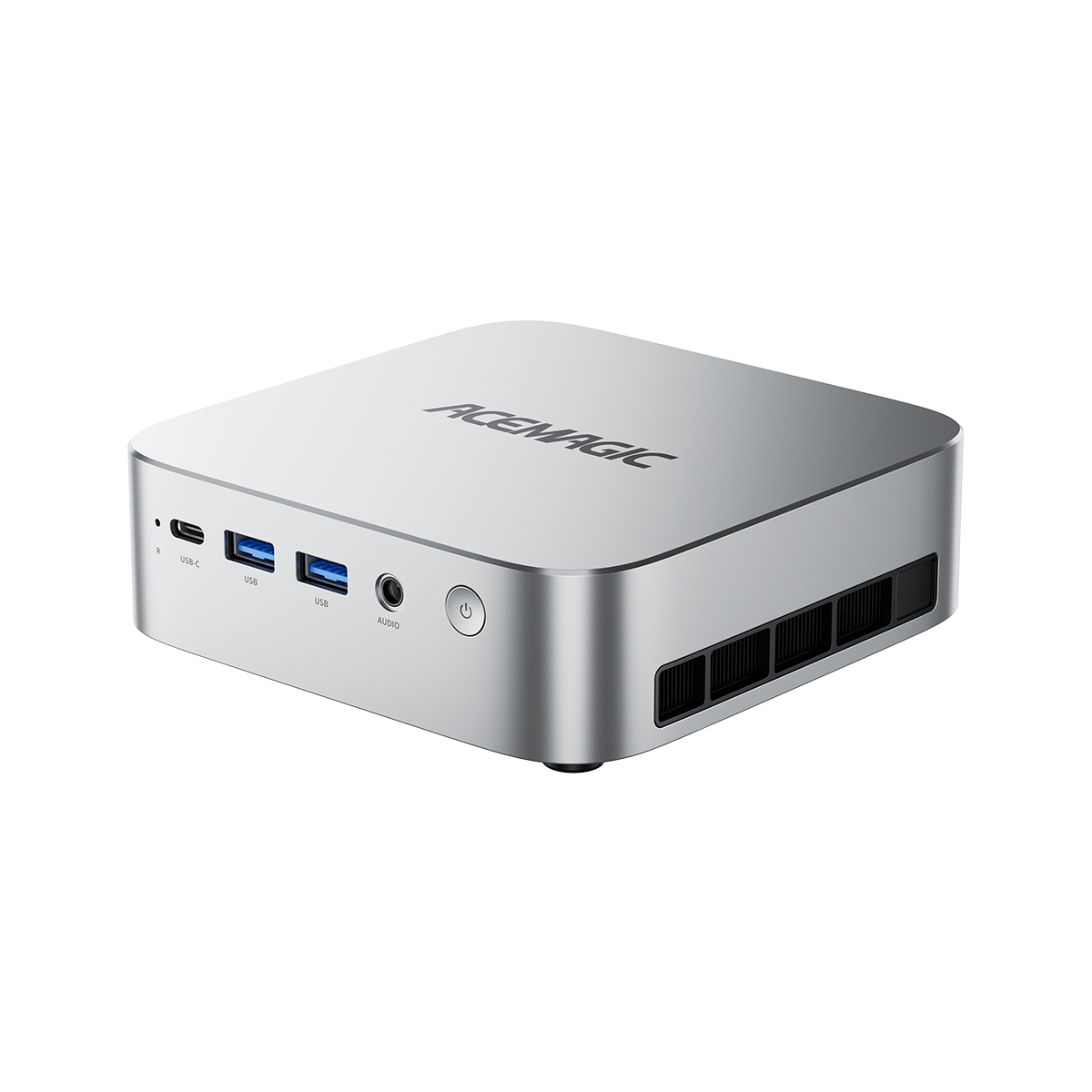
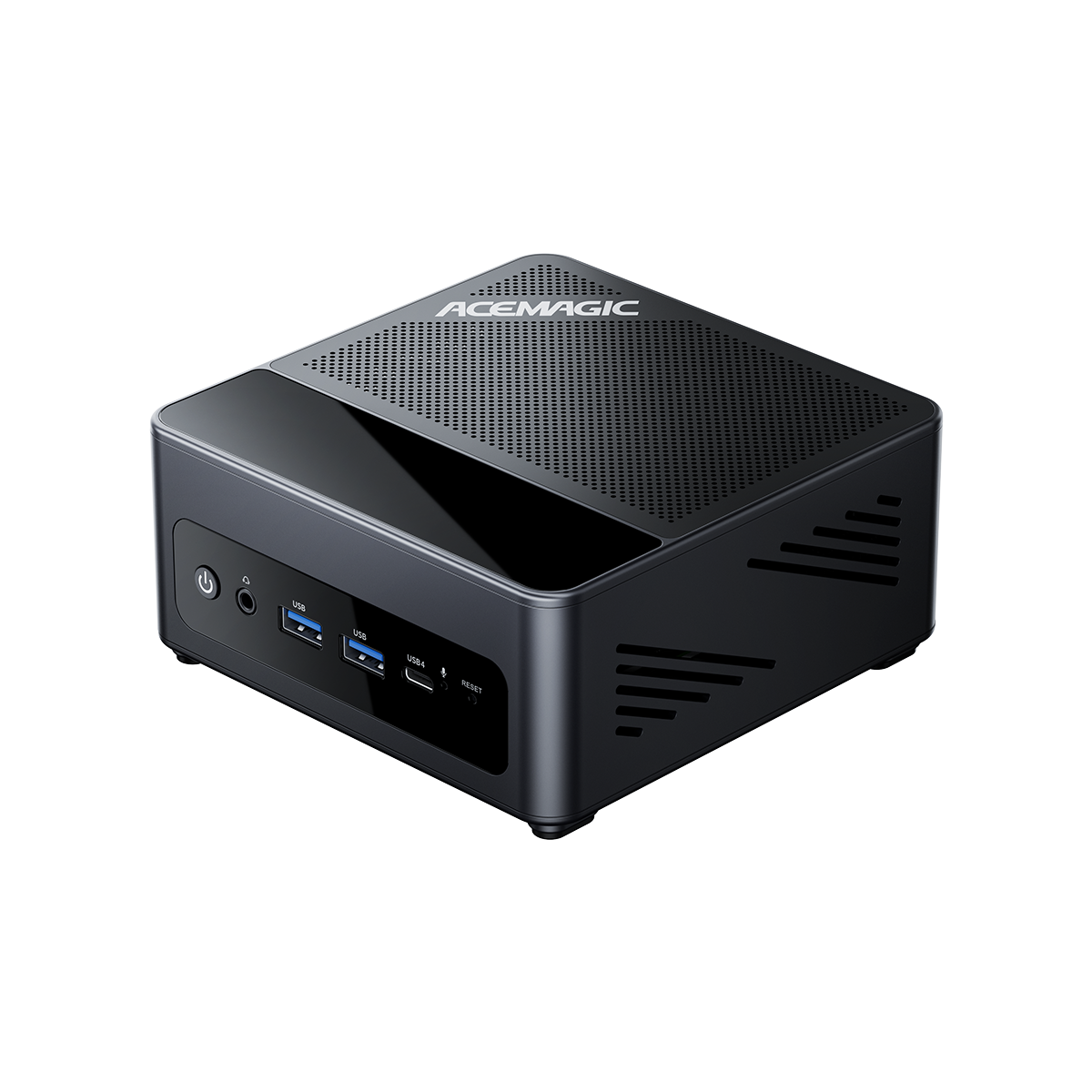
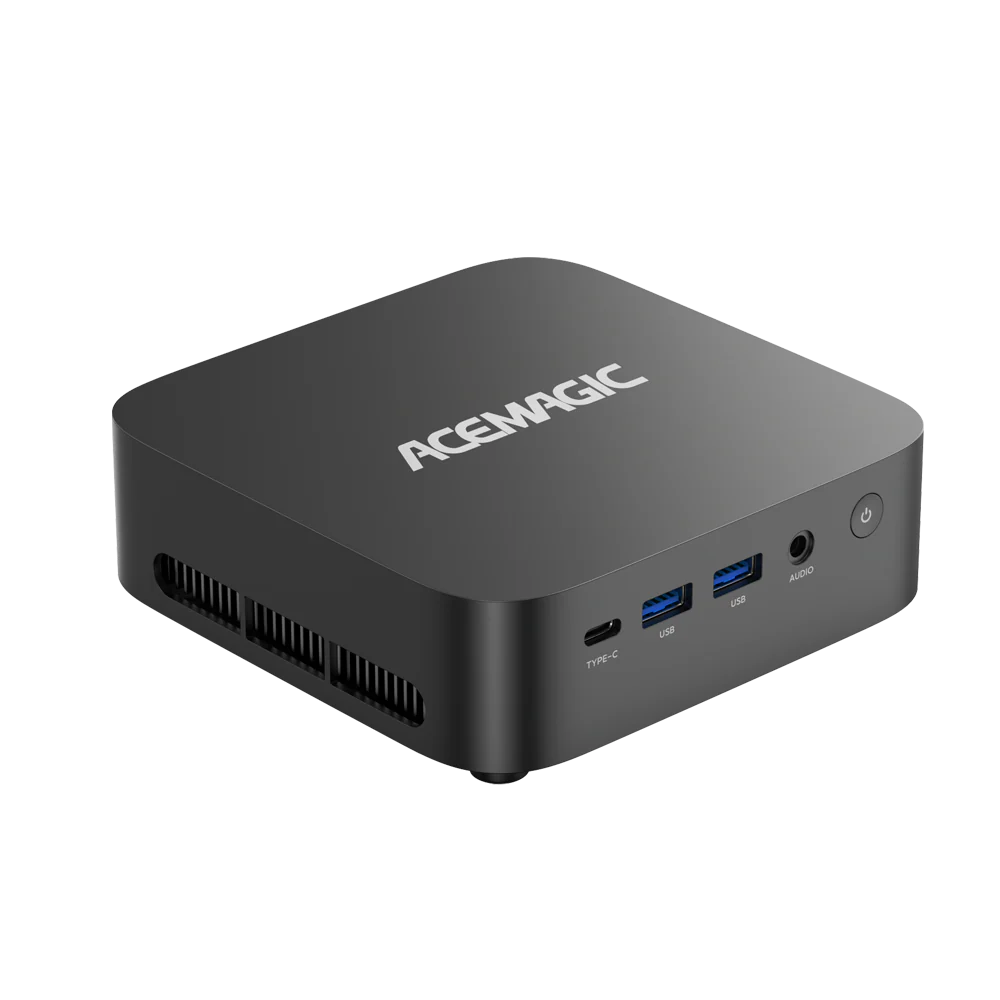
For users looking specifically for an AI Mini PC, products based on Ryzen AI Max+ 395 represent a new direction. A compact system such as the ACEMAGIC M1A Pro+ AI Max+ 395 is designed around the idea of bringing advanced AI computing into a smaller desktop form factor.

Best for: AI developers, local LLM enthusiasts, and users who need a compact AI workstation without a full-size desktop.
Learn MoreRyzen AI Max+ 395 for Local AI: Strengths and Limitations
Ryzen AI Max+ 395 is designed around the idea of bringing workstation-level AI capability into smaller form factors. Unlike traditional Mini PCs that rely on low-power processors and limited integrated graphics, Strix Halo combines a high-performance CPU, a powerful integrated GPU, and large unified memory support.
Advantages of Ryzen AI Max+ 395 for Local AI
1. Large Memory Capacity for Larger AI Models
The biggest advantage of Ryzen AI Max+ 395 is its memory flexibility. With support for up to 128GB LPDDR5X unified memory, the platform can handle workloads that are limited by memory capacity on many consumer computers.
For local AI users, more memory can help with:
- Larger language models (70B+ parameters)
- Longer context windows
- Multiple AI tools running simultaneously
- AI development environments
2. Radeon 8060S Provides Strong Integrated GPU Performance
Traditional integrated graphics are usually designed for office work, video playback, and basic graphics tasks. Radeon 8060S targets a much higher performance level and can help accelerate AI image generation, GPU-based computing workloads, creative applications, and gaming.
This makes Ryzen AI Max+ 395 especially suitable for compact AI PCs where installing a dedicated GPU is not practical.
3. Flexible AI Software Environment
Windows and Linux support provides access to a wider range of AI tools and development environments. This is important for developers, researchers, and AI enthusiasts who need compatibility with different frameworks and applications.
Limitations of Ryzen AI Max+ 395
1. AI Software Ecosystem
NVIDIA remains the dominant platform for AI development because of CUDA support. AMD has made progress with ROCm and other AI software solutions, but some AI tools still receive optimization earlier on NVIDIA platforms.
2. Higher Power Consumption
At 55W default TDP (configurable up to 120W), Ryzen AI Max+ 395 has a higher thermal design point than Apple M4 Pro. This means more heat, potentially more noise, and higher electricity costs over time.
3. Software Optimization Still Matters
Hardware performance is only one part of AI computing. Actual results depend on AI framework support, driver optimization, and model compatibility.
Apple M4 Pro for Local AI: Strengths and Limitations
Apple M4 Pro takes a different approach. Instead of focusing on maximum memory capacity or hardware flexibility, Apple prioritizes efficiency, software optimization, and user experience.
Advantages of Apple M4 Pro for Local AI
1. Strong Hardware and Software Integration
Apple controls the processor design, macOS, developer tools, and hardware acceleration APIs. This allows many applications to be optimized specifically for Apple Silicon, resulting in smooth creative workflows, stable performance, and efficient AI-assisted applications.
2. Excellent Energy Efficiency
At 40W TDP, Apple M4 Pro has one of the lowest power envelopes among high-performance processors. For users who need quiet operation, low power consumption, and compact desktop setups, M4 Pro provides an excellent experience.
3. Competitive Real-World Performance
Despite lower core counts, Apple M4 Pro leads in Geekbench 6.4 multi-core (22,527 vs 21,269) and WebXPRT 4 (345 vs 317) according to third-party benchmark data, showing that Apple's architecture optimization delivers competitive performance per watt.
Limitations of Apple M4 Pro for Local AI
1. Lower Maximum Memory Capacity
While Apple's unified memory architecture is highly efficient, the 64GB maximum can become a limitation for users running larger AI models. Compared with Ryzen AI Max+ 395 systems supporting up to 128GB memory, M4 Pro configurations provide fewer options for extremely memory-intensive AI workloads.
2. Less Hardware Flexibility
Apple devices provide a highly controlled experience. This is an advantage for simplicity, but a limitation for users who want more customization, different operating systems, or hardware expansion options.
3. macOS-Only Ecosystem
All Apple Silicon systems are locked to macOS. Users who need Linux for specific AI development workflows cannot run it natively on M4 Pro hardware.
Ryzen AI Max+ 395 vs Apple M4 Pro: Local AI Use Case Comparison
The best platform depends on what you actually want to do.
Running Local Large Language Models (LLMs)
Local LLM performance depends mainly on available memory, GPU acceleration, and software support.
| Use Case | Better Choice | Why |
|---|---|---|
| Small local AI models (7B–13B) | Both platforms | Both have enough memory and GPU power |
| Larger models (30B–70B+) | Ryzen AI Max+ 395 | 128GB memory can load models that exceed 64GB |
| AI experimentation and development | Ryzen AI Max+ 395 | Windows/Linux flexibility, more memory headroom |
| Simple AI assistants | Apple M4 Pro | Better efficiency, optimized macOS AI tools |
The main advantage of Ryzen AI Max+ 395 is not only speed, but the ability to run models that require more memory than Apple M4 Pro can provide.
AI Image Generation
Ryzen AI Max+ 395
- Strong integrated GPU (Radeon 8060S)
- Flexible Windows AI tools
- Better hardware customization
- Suitable for Stable Diffusion, ComfyUI
Apple M4 Pro
- Optimized creative applications
- Efficient performance
- Strong macOS ecosystem
- Suitable for Apple-focused workflows
AI Coding and Development
Ryzen AI Max+ 395
- AI development experiments
- Local model testing
- Windows/Linux compatibility
Apple M4 Pro
- Excellent developer experience
- Efficient operation
- Strong Unix-based environment (macOS)
Ryzen AI Max+ 395 Mini PC vs Mac mini M4 Pro
For many buyers, the real comparison is not only the chip — it is the complete system: Ryzen AI Max+ 395 Mini PC vs Mac mini M4 Pro.
Why Choose a Ryzen AI Max+ 395 Mini PC?
A Strix Halo Mini PC offers several advantages:
- High memory configurations — up to 128GB for large AI models
- Powerful integrated graphics — Radeon 8060S handles AI and gaming workloads
- Compact workstation designs — desktop-class performance in a small form factor
- More connection options — greater configuration choices and operating system flexibility
For AI enthusiasts who want a compact local AI workstation, Ryzen AI Max+ 395 Mini PCs are an attractive option.
Why Choose Mac mini M4 Pro?
Mac mini M4 Pro remains an excellent choice for users who value simplicity:
- macOS experience — polished, optimized, and reliable
- Quiet operation — 40W TDP means nearly silent under most workloads
- Strong creative software support — Final Cut Pro, Logic Pro, and optimized AI apps
- Excellent energy efficiency — lower electricity costs over time
It is ideal for users who want a powerful desktop without spending time configuring hardware.
Performance and Value Comparison
| Category | Ryzen AI Max+ 395 Mini PC | Mac mini M4 Pro |
|---|---|---|
| Local AI model capacity | Excellent (128GB max) | Good (64GB max) |
| Multi-core CPU performance | Excellent (PassMark 55,036) | Very Good (PassMark 37,977) |
| Single-thread responsiveness | Very Good | Excellent (Geekbench SC leader) |
| Energy efficiency | Good (55–120W TDP) | Excellent (40W TDP) |
| Hardware flexibility | Excellent (Windows/Linux) | Limited (macOS only) |
| Creative software ecosystem | Good | Excellent |
| AI development flexibility | Excellent (ROCm, OpenCL, DirectML) | Good (Metal, Core ML) |
| Noise and cooling | Requires more robust cooling | Near-silent operation |
For AI-focused buyers, Ryzen AI Max+ 395 provides advantages through memory capacity and GPU capability. For general professional users, Apple M4 Pro offers a more polished and efficient experience.
Choose Ryzen AI Max+ 395 if you:
- Want to run AI models locally, especially larger models requiring 64GB+ memory
- Need large memory capacity for AI development
- Prefer Windows/Linux flexibility
- Want an AI Mini PC with strong integrated graphics
- Need a compact workstation solution
Choose Apple M4 Pro if you:
- Prefer macOS and the Apple ecosystem
- Value energy efficiency and quiet operation (40W TDP)
- Use professional creative applications (Final Cut, Logic)
- Want a simple, optimized computing experience
- Prioritize single-thread responsiveness over raw multi-core throughput
Overall Conclusion
Ryzen AI Max+ 395 and Apple M4 Pro represent two different visions of the future AI PC.
Apple M4 Pro delivers excellent efficiency and software optimization at 40W, with competitive single-thread performance and near-silent operation.
Ryzen AI Max+ 395 focuses on AI flexibility, higher memory capacity (up to 128GB), and compact workstation performance, with a significant multi-core advantage in PassMark testing according to third-party benchmark data.
For users building a local AI setup, especially those interested in Strix Halo Mini PCs and large AI models, Ryzen AI Max+ 395 offers a unique advantage through its memory capacity and GPU capability. For users who want a refined desktop experience with strong efficiency, Apple M4 Pro remains an excellent choice.
Frequently Asked Questions
1. What is AMD Strix Halo and why is it important for AI PCs?
AMD Strix Halo is the platform behind Ryzen AI Max processors, designed for high-performance AI PCs. Unlike traditional laptop processors, Strix Halo combines Zen 5 CPU cores, Radeon 8060S graphics, XDNA 2 AI acceleration (50 TOPS), and large unified memory support (up to 128GB). This allows compact AI PCs to handle more demanding workloads, including local AI applications, content creation, and advanced computing tasks.
2. Can Ryzen AI Max+ 395 run local LLMs?
Yes. Ryzen AI Max+ 395 is designed for local AI workloads and supports configurations with up to 128GB of unified memory. The amount of memory available directly affects which AI models can run locally. Users working with local language models, AI coding assistants, and AI agents should consider both memory capacity and software compatibility when choosing hardware.
3. How much RAM do I need for an AI PC?
The ideal memory size depends on the type of AI workloads you plan to run.
| Usage | Recommended Memory |
|---|---|
| AI assistants and basic AI tools | 16GB – 32GB |
| Local AI experiments (7B–13B models) | 32GB – 64GB |
| Larger language models and development (30B+) | 64GB+ |
More memory does not automatically improve every task, but it allows AI applications to work with larger models and more complex workflows.
4. Can a Ryzen AI Max+ 395 Mini PC replace a desktop with a dedicated GPU?
For many users, yes. A Ryzen AI Max+ 395 Mini PC can provide strong AI and graphics performance without the size and power requirements of a traditional desktop with a separate GPU. It is suitable for local AI applications, content creation, gaming, and productivity workloads. However, professional AI training workloads may still require high-end dedicated GPUs like NVIDIA's RTX 4090 or A100.
5. Is Ryzen AI Max+ 395 better than Mac mini M4 Pro?
The answer depends on your priorities. Ryzen AI Max+ 395 is the better choice for users who need higher memory capacity (128GB vs 64GB), more hardware flexibility, Windows/Linux compatibility, and local AI experimentation. Mac mini M4 Pro is better for users who prefer macOS, lower power consumption (40W vs 55–120W), and Apple ecosystem applications.
References
AMD Ryzen AI Max+ 395 Official Specifications
https://www.amd.com/en/products/processors/laptop/ryzen/ai-300-series/amd-ryzen-ai-max-plus-395.html
Technical City CPU Comparison — Apple M4 Pro vs Ryzen AI Max+ 395
https://technical.city/en/cpu/Apple-M4-Pro-14-cores-vs-Ryzen-AI-Max-plus-395https://technical.city/en/video/Radeon-8060S-vs-Apple-M4-20-core-GPU