
LPDDR5 vs LPDDR5X: What’s the Difference and Which Memory Is Better?
In this guide, we will break down the differences between LPDDR5 and LPDDR5X to help you make an informed buying decision.
The Quick Answer: LPDDR5X offers significantly higher transfer speeds and improved power efficiency compared to standard LPDDR5. However, whether you will actually notice those real-world gains depends entirely on your daily workload.

What Is LPDDR5 Memory?
To understand the difference, we first need to define the acronym. LPDDR stands for Low-Power Double Data Rate memory.
Unlike standard DDR memory (like the stick-based RAM you find in desktop PCs), LPDDR is designed specifically to consume as little power as possible while still delivering high performance. This is why LPDDR is used instead of standard DDR memory in mobile devices, thin-and-light laptops, and compact Mini PCs. It allows manufacturers to build incredibly thin devices that last all day on a single charge.
What Is LPDDR5X Memory?
LPDDR5X is the direct evolution of LPDDR5. Developed as an enhanced, optimized version of the LPDDR5 standard, it pushes the boundaries of what low-power memory can do.
The primary focus of LPDDR5X is delivering higher transfer speeds without sacrificing battery life. To achieve this, engineers improved the signal integrity and reliability of the memory chips, allowing data to travel faster and more efficiently between the RAM and the processor.
Additionally, LPDDR5X achieves roughly 20% better power efficiency through enhanced Dynamic Voltage and Frequency Scaling (DVFS) and optimized low-power sleep states. It intelligently dials back its clock speeds and power draw when the system is idling or doing light work, allowing it to excel in battery-powered devices.
LPDDR5 vs LPDDR5X: Specifications Comparison

Here is a quick look at how the two memory standards stack up on paper:
| Feature | LPDDR5 | LPDDR5X |
| Maximum Data Rate | Up to 6400 MT/s | 8533 MT/s up to 10700 MT/s |
| Bandwidth | High | Higher |
| Power Efficiency | Excellent | Improved (~20% better) |
| Latency | Similar | Similar |
| AI Workload Support | Good | Better |
| Common Devices | Mainstream laptops | Premium laptops & AI PCs |
Key Takeaway: LPDDR5X primarily improves bandwidth (the amount of data that can be moved at once) rather than dramatically reducing latency (the delay before data transfer begins).
LPDDR5 vs LPDDR5X Performance: Real-World Impact
Specs are great, but how does this translate to daily use? Let's break down the expected difference across various computing tasks.
Everyday Productivity
For tasks like web browsing, running Microsoft Office applications, and joining Zoom or Teams video conferences, memory speed is rarely a bottleneck.
- Expected Difference: Minimal performance improvement. Most users will not notice a major change between the two when doing standard office work.
Content Creation
Photo editing, video editing (especially 4K timelines), and heavy multitasking require massive amounts of data to be shifted in and out of memory constantly.
- Expected Difference: Noticeable. LPDDR5X allows for the faster handling of large files and provides better overall responsiveness during heavy multitasking sessions.
Gaming Performance
If you are gaming on a thin-and-light laptop or a Mini PC without a dedicated graphics card, your system relies on integrated graphics (iGPU). Integrated graphics use your system's RAM as video memory (VRAM). Therefore, memory bandwidth becomes a massive bottleneck for gaming performance.
- Expected Difference: Significant. LPDDR5X will yield higher FPS (frames per second) in memory-sensitive games, offering much larger gains for systems without discrete GPUs.
AI and Machine Learning Workloads
The era of the "AI PC" is here. Local AI inference, NPU-assisted applications (Neural Processing Units), and on-device Generative AI workloads require immense data throughput to function in real-time.
- Expected Difference: Crucial. LPDDR5X ensures faster data movement, providing significantly better support for next-gen AI PCs and Copilot+ devices.
Can You Upgrade from LPDDR5 to LPDDR5X?
Before you pull out a screwdriver, there is one very important limitation you need to know: historically, LPDDR memory has always been soldered directly to the motherboard. Because of the strict signal requirements and low-power design, traditional RAM "slots" aren't used.
The LPCAMM2 Exception: Recently, a new modular standard called LPCAMM2 was introduced to allow for upgradeable LPDDR memory without sacrificing low-power benefits. While it is starting to appear in a few premium laptops, the vast majority of laptops on the market today still use soldered memory.
What Buyers Should Know:
- For most devices, your memory type and capacity are permanently chosen at the time of purchase.
- Upgrading your RAM later is generally impossible unless you specifically buy a laptop equipped with LPCAMM2 modular memory.
Pro Buying Tip: Always choose enough RAM capacity first (aim for 16GB, 32GB, or more depending on your needs), and then consider the speed (LPDDR5X) as a secondary advantage. 32GB of slower LPDDR5 will almost always outperform 8GB of ultra-fast LPDDR5X.
LPDDR5 vs LPDDR5X: Which Should You Choose?
Still on the fence? Here is a quick cheat sheet to help you decide.
Choose LPDDR5 If:
- You want a budget-friendly laptop or Mini PC.
- Your workload consists mostly of office tasks, web browsing, and media consumption.
- The device's reviewed battery life is already sufficient for your needs.
Choose LPDDR5X If:
- You rely on integrated graphics for gaming or 3D rendering.
- You perform heavy content creation tasks (video editing, high-res photo manipulation).
- You plan to run local AI applications and want to utilize a modern NPU.
- You want the most future-proof platform available today.
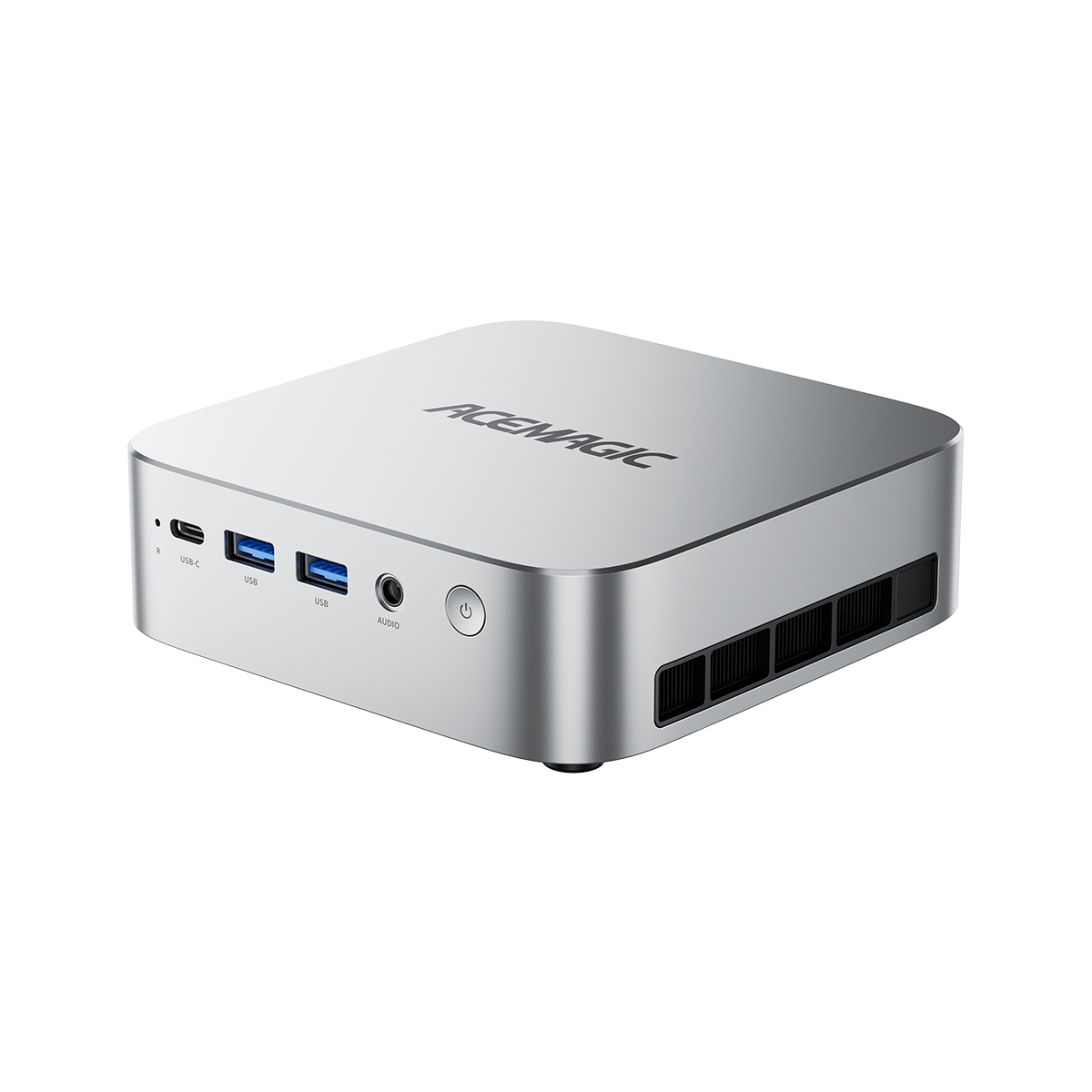
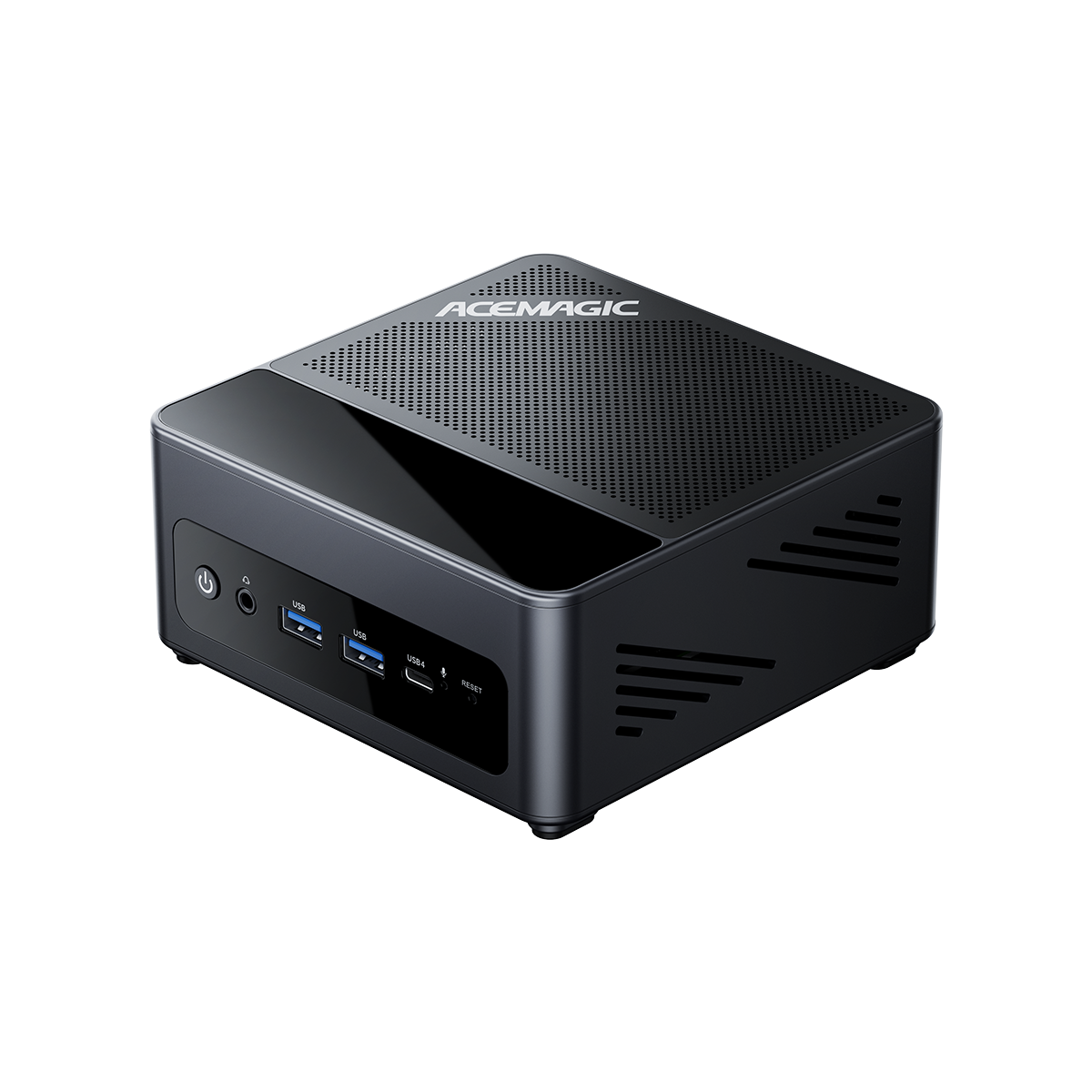
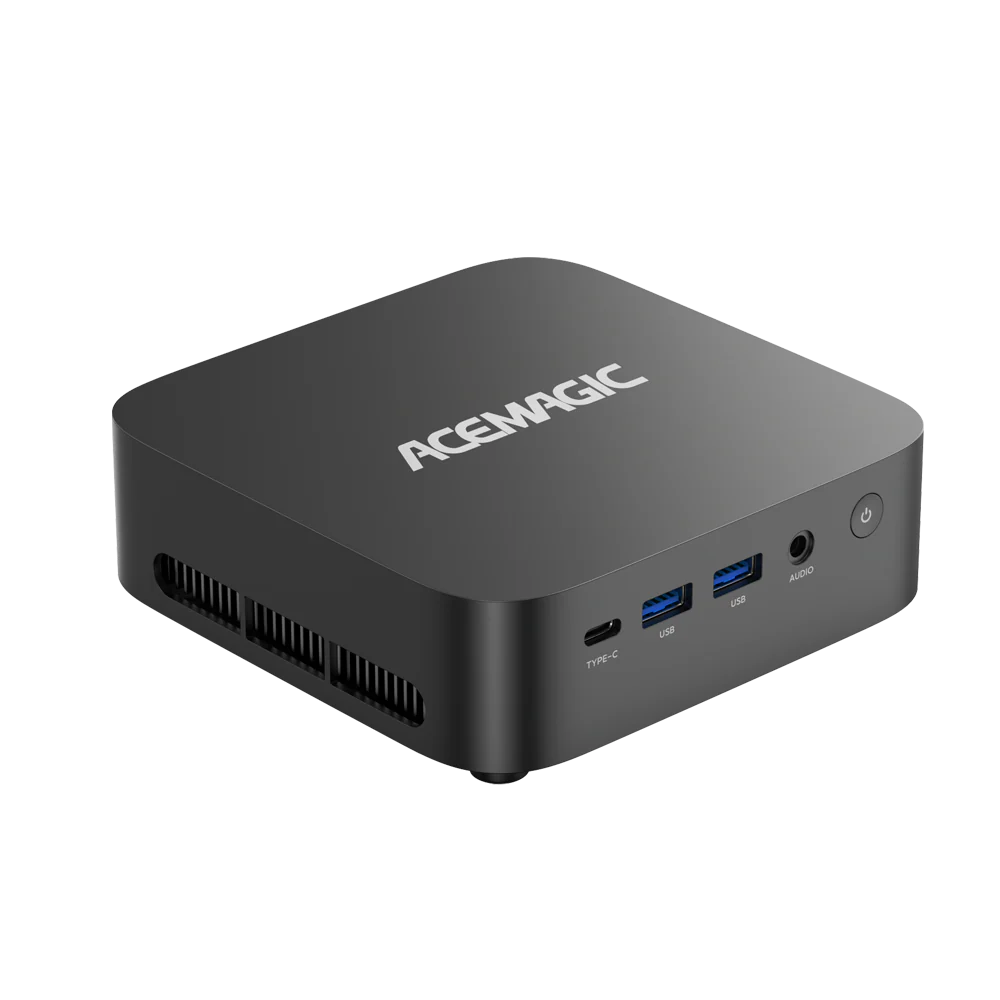
If you are leaning toward LPDDR5X for heavy AI workloads or premium performance, devices like the ACEMAGIC M1A PRO+ are prime examples of how this ultra-fast memory is being utilized to power modern computing:

ACEMAGIC M1A PRO+ Mini PC
A powerful local AI workstation for large models and multi-agent development.
- AMD Ryzen™ AI Max+ 395 CPU
- 128GB 8000MHz + 2TB PCIe 4.0 SSD
- up to 140 W of power
- Triple-Fan Deep-Freeze System
Frequently Asked Questions (FAQs)
Is LPDDR5X faster than LPDDR5?
Yes. LPDDR5X provides significantly higher memory bandwidth and transfer speeds, jumping from a maximum of 6400 MT/s on standard LPDDR5 to 8533 MT/s. Newer premium LPDDR5X modules are now pushing 9600 MT/s and even up to 10700 MT/s.
Is LPDDR5X better for gaming?
Yes, absolutely—especially on systems that rely on integrated graphics. Because the iGPU shares system memory, the faster bandwidth of LPDDR5X directly translates to better frame rates.
Does LPDDR5X improve battery life?
Potentially. It is fundamentally more power-efficient at moving data thanks to smart sleep states, although the overall system design, screen brightness, and CPU will have a much greater impact on your laptop's battery life.
Is LPDDR5X worth it for AI PCs?
Yes. Higher bandwidth benefits AI workloads, NPUs, and on-device machine learning inference, preventing data bottlenecks when processing complex models.
Can LPDDR5 be upgraded to LPDDR5X?
In most cases, no. Because of its low-power design, standard LPDDR memory is soldered directly to the motherboard. Unless you specifically purchase a newer device featuring the modular LPCAMM2 memory standard, your RAM cannot be upgraded by the user after purchase.
Conclusion
Both LPDDR5 and LPDDR5X are highly efficient, incredible memory technologies that make today's thin, powerful, and long-lasting devices possible.
Ultimately, LPDDR5X is an optimization that improves bandwidth, power efficiency, and AI-readiness. For everyday users typing emails and watching Netflix, the difference may be small. But for buyers investing in AI PCs, systems with integrated graphics, creators, and power users, LPDDR5X is undeniably the better long-term choice.