
Mac Mini M4 vs x86 Mini PCs for Local AI: Which Should You Buy?

Open-source frameworks like OpenClaw are accelerating the shift toward local AI agents in 2026. Instead of relying entirely on cloud APIs, users are deploying models locally to cut subscription costs and keep data private. This comparison evaluates the base Mac Mini M4 against x86 mini PCs using real-world hardware testing to help you choose the right local AI server.
Before comparing AI workloads, see our Mac vs Windows comparison for key differences in performance, flexibility, and use cases.
What Hardware Does Local AI Actually Need?
Local AI models rely entirely on Random Access Memory (RAM) to load parameters. Without sufficient RAM, the model simply will not start. A 7-billion parameter (7B) model requires roughly 8GB of RAM, while a 32-billion parameter (32B) model demands at least 24GB of RAM.
If you process data through cloud APIs (like OpenAI), your computer only needs enough memory for the OS and background scripts—16GB of RAM is plenty. For 100% local, offline AI, high RAM capacity is your primary hardware requirement.
Mac Mini M4: Best for Cloud APIs and Small Models
The base Mac Mini M4 features 16GB of unified memory. Since the GPU directly shares this pool with the CPU, it achieves fast generation speeds of 30 to 40 tokens per second (t/s) on 8B parameter models. It runs at an ultra-low wattage—drawing under 15 watts at idle—ensuring silent 24/7 operation.
The major constraint is upgradeability. Apple's hardware design permanently locks the RAM and storage at the time of purchase. Buying the 16GB base model permanently limits you to smaller AI models.
x86 Mini PCs: Best for Large Models and Windows Automation
Standard x86 mini PCs use slotted SO-DIMM DDR5 RAM. You can physically open the case and upgrade to 64GB or 96GB for just $150 to $250. This capacity unlocks the ability to run large 32B or 70B models offline. During active inference, x86 processors typically draw a higher 45W to 65W of power.
Operating system choice is another factor. Windows dominates Desktop Robotic Process Automation (RPA), natively supporting tools that control spreadsheets, SEO trackers, and web browsers. Furthermore, x86 motherboards usually feature dual M.2 PCIe slots, letting you install up to 8TB of internal storage for vector databases and Retrieval-Augmented Generation (RAG) document libraries without relying on external dongles.
Hardware Data Comparison
| Hardware Feature | Mac Mini M4 (Base) | Typical x86 Mini PC |
| Base RAM | 16GB Unified | 16GB or 32GB DDR5 |
| Max RAM Capacity | 16GB (Locked) | 64GB or 96GB |
| Cost to Upgrade to 64GB | Not Possible | $150 - $250 |
| Internal Storage Slots | 1 (Soldered) | 2x M.2 PCIe |
| Active Power Draw | 15W - 30W | 45W - 65W |
| Desktop Automation (RPA) | Limited (macOS) | High (Windows) |
How to Choose the Right PC for You
Choose the Mac Mini M4 if:
- You use Cloud APIs: Your agent offloads heavy reasoning to OpenAI/Anthropic, requiring minimal local hardware.
- You run Small Models: You only need 7B or 8B models for basic text processing and summarization.
- You need a Headless Server: You want a silent, 15W macOS machine running 24/7.
Choose an x86 Mini PC if:
- You run Large Local Models: You need to load 32B or 70B models, requiring cheap 64GB+ RAM upgrades.
- You use Desktop Automation: Your workflow depends on Windows-specific RPA tools or Excel macros.
- You build RAG Systems: You need dual M.2 SSDs to store massive local vector databases.
Our Top x86 Picks for AI Workflows
If your workload requires the high RAM capacity and Windows compatibility of x86, ACEMAGIC provides two hardware configurations built on the latest AMD Ryzen AI architecture.
ACEMAGIC F5A (Barebone): Maximum RAM Customization
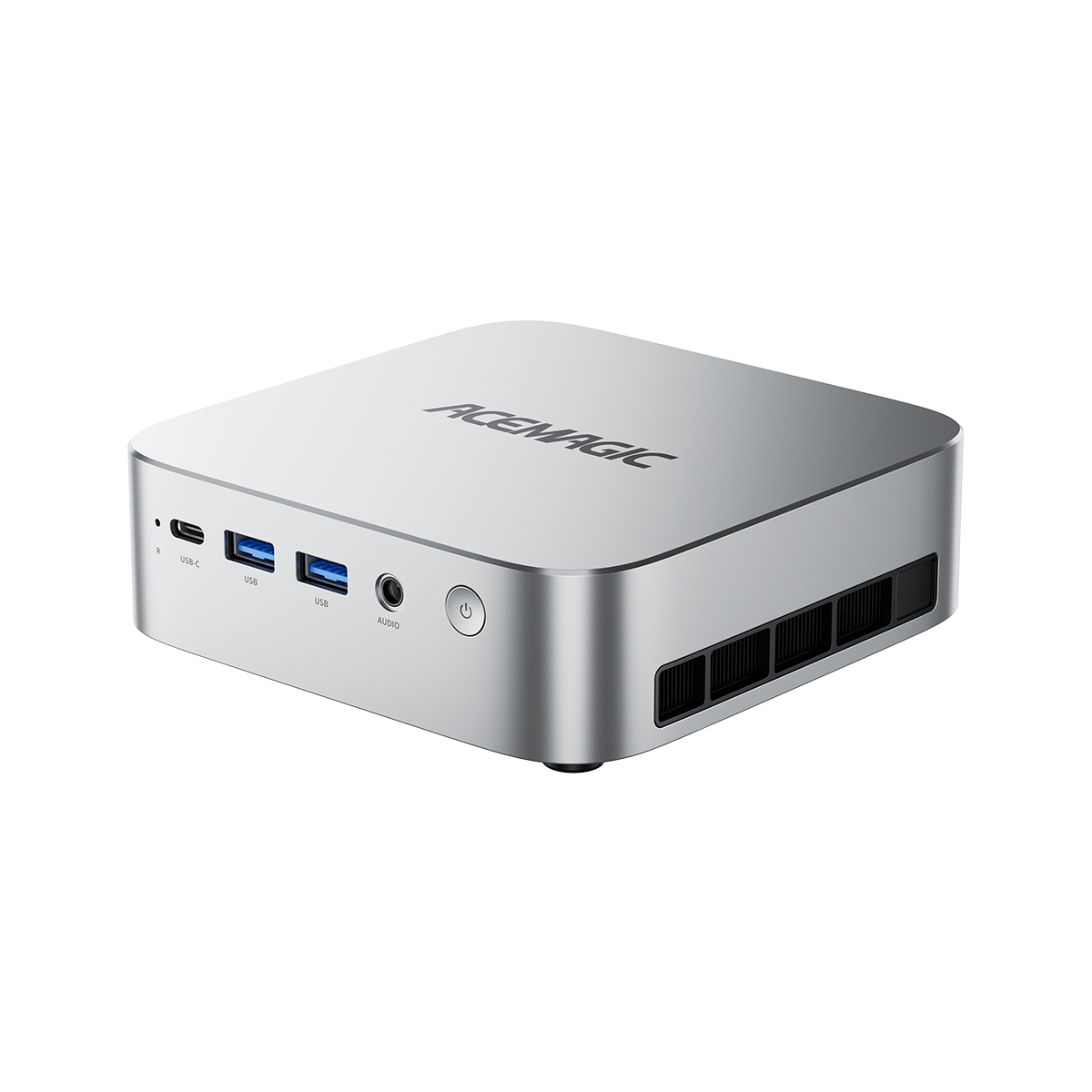
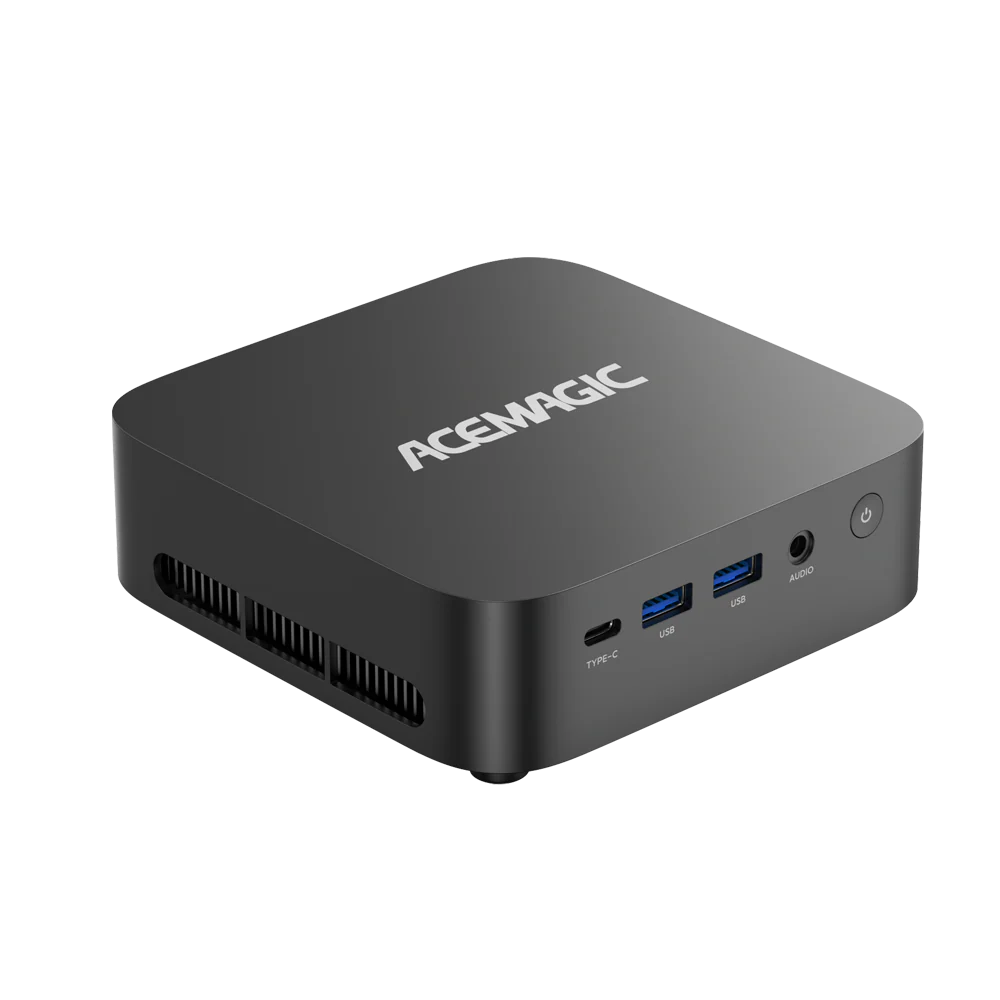
For users building a high-capacity AI server from scratch, the ACEMAGIC F5A is a barebone system featuring the AMD Ryzen AI 9 HX 370. The barebone format lets you source your own memory and storage. Its motherboard provides dual DDR5 SO-DIMM slots supporting up to 128GB of 5600MHz RAM, meeting the exact requirements for loading massive 32B or 70B local models. The 65W processor also integrates a Neural Processing Unit (NPU) capable of 50 TOPS to handle background AI tasks efficiently, alongside two M.2 2280 NVMe PCIe 4.0 slots for local storage.

ACEMAGIC F5A Mini PC
A compact AI system designed to run automation agents and background workflows reliably.
- AMD Ryzen™ AI 9 HX 370 CPU
- Barebones
- OCULink support
- Efficient Dual-Fan Cooling System
ACEMAGIC M1A PRO+: High-Bandwidth Unified Memory
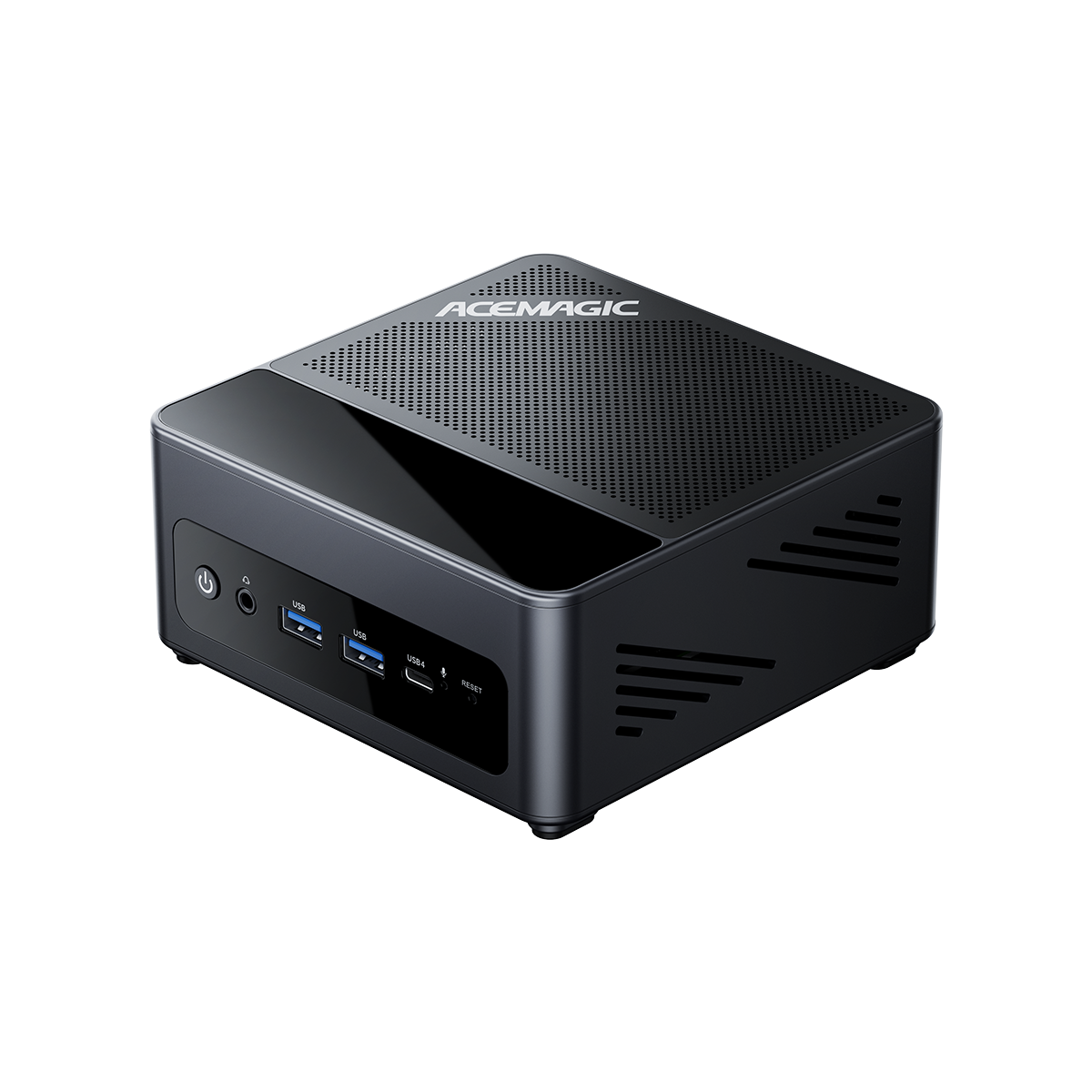
The ACEMAGIC M1A PRO+ uses the AMD Ryzen AI Max+ 395 to replicate Apple's fast unified memory speeds on an x86 platform. It features 128GB of LPDDR5x RAM running at 8000MHz. Users can allocate up to 96GB directly as Video RAM (VRAM) for the massive 40-core Radeon 8060S integrated GPU. This architecture delivers high memory bandwidth for rapid token generation (t/s) on large models. The system operates at a 120W TDP and includes three M.2 2280 slots for extensive internal storage expansion.

ACEMAGIC M1A PRO+ Mini PC
A powerful local AI workstation for large models and multi-agent development.
- AMD Ryzen™ AI Max+ 395 CPU
- 128GB 8000MHz + 2TB PCIe 4.0 SSD
- Tool-free Magnetic Design
- Triple-Fan Deep-Freeze System