
What Is an NPU? The Hardware Inside Modern AI PCs

By 2026, Neural Processing Units (NPUs) have become foundational components in personal computing hardware. Microsoft previously established a minimum requirement of 40 TOPS (Tera Operations Per Second) for devices to qualify for the Copilot+ PC designation. Manufacturers now natively integrate NPUs into their silicon to meet and exceed this standard. This article explains the technical function of an NPU, its underlying architecture, and its measurable impact on laptops and Mini PCs.
CPU, GPU, and NPU: The System-on-Chip (SoC) Triangle
Modern processors use a System-on-Chip (SoC) design. The CPU, GPU, and NPU reside on the exact same physical piece of silicon. This physical proximity allows them to share system memory (RAM) and hand off tasks instantly. Each component handles specific mathematical workloads based on its architectural design.
| Processor | Primary Function | Core Architecture Focus | Precision Handling | Power Draw |
| CPU | OS management, logical operations | Sequential processing | High (FP64/FP32) | Moderate |
| GPU | 3D rendering, video encoding | Parallel processing | High to Medium (FP32/FP16) | High |
| NPU | Neural networks, machine learning | Matrix multiplication | Low (INT8/INT4) | Low |
The CPU acts as the control center and executes complex logical instructions one after another. The GPU handles thousands of concurrent threads necessary for pixel rendering. The NPU focuses entirely on matrix math.
How an NPU Actually Works
Traditional processors execute strict, rule-based logic. Conversely, AI features require pattern recognition, such as facial identification or voice isolation. Neural networks require millions of simultaneous math operations to achieve this pattern matching.
The core of an NPU consists of Multiply-Accumulate (MAC) units. An NPU groups thousands of MAC units together to process massive grids of numbers (matrices) at once.
Furthermore, AI models do not require extreme mathematical precision to deliver accurate results. The NPU processes lower-precision data types like INT8 (8-bit integers). Calculating INT8 data requires significantly less electrical power compared to the FP32 (32-bit floating-point) calculations handled by a standard GPU. This hardware-level specialization reduces the total power budget required for AI workloads.
The Software Connection: DirectML and ONNX
Hardware requires compatible software to function. Developers build applications using mature frameworks like ONNX (Open Neural Network Exchange). Operating systems rely on APIs like Microsoft DirectML to bridge these applications and the hardware.
When a user launches an AI-enabled application, the software queries the operating system. The OS detects the available NPU via DirectML and routes the specific machine learning workload directly to that hardware block. The system shifts the burden away from the CPU automatically.
Why Mini PCs and Laptops Require NPUs
Desktop towers accommodate large cooling fans and high-wattage power supplies. Mini PCs and laptops face severe thermal and spatial constraints.
- Thermal Management: Small form factor chassis trap heat quickly. When a traditional CPU reaches critical temperatures, it lowers its clock speed to prevent hardware damage. This process is thermal throttling. Shifting continuous AI workloads to a low-wattage NPU keeps the primary processor cool. The system maintains maximum clock speeds for the user's active applications.
- Battery Life Extension: Laptops rely on finite battery capacity. A standard GPU draws 30 to 40 watts while processing AI algorithms. An NPU processes the exact same tasks, like video background blur, drawing only 5 to 10 watts. This hardware efficiency can extend battery life by 15% to 20% during intensive workloads. This translates to 1.5 to 3 extra hours of usable time away from wall outlets.
Practical Applications for Different Users
The addition of an NPU alters how specific software runs on the device.
- Office Workers: Windows Studio Effects runs entirely on the NPU. The CPU remains free for large Excel spreadsheets. The NPU maintains background blur and voice isolation simultaneously during Microsoft Teams calls.
- Students and Global Teams: NPUs accelerate real-time audio transcription and language translation during live lectures or international meetings without requiring an active internet connection.
- Creative Professionals: Software like Adobe Premiere Pro and Photoshop routes specific computational filters through the NPU. Features like object selection or generative fill execute rapidly and accelerate final export times.
- Local AI Users: Historically, AI processing required remote cloud servers. Devices uploaded data, waited for computation, and downloaded results. An NPU enables Edge AI, which executes the inference phase entirely on the local device. This protects user privacy and eliminates cloud latency.
AMD Ryzen AI 370 and 395+: High-Performance NPUs
Advanced hardware specifications define modern computing standards. The AMD Ryzen AI 300 series, utilizing the XDNA 2 architecture, remains a benchmark for high-performance Mini PCs and laptops. The XDNA 2 architecture utilizes spatial dataflow technology. This design moves data directly between MAC units without constantly accessing the main system memory. This specific structural choice lowers latency and power consumption.
The AMD Ryzen AI 9 HX 370 features an NPU capable of 50 TOPS. This metric exceeds the baseline Copilot+ standard by 25%. The AMD Ryzen AI 395+ offers even higher sustained AI throughput for demanding local models. These specific processors deliver workstation-grade machine learning capabilities inside highly portable form factors.
Top AI Mini PCs and Laptops Available Now
Hardware equipped with AMD's silicon is available for immediate deployment. Review the specifications below for our current inventory.

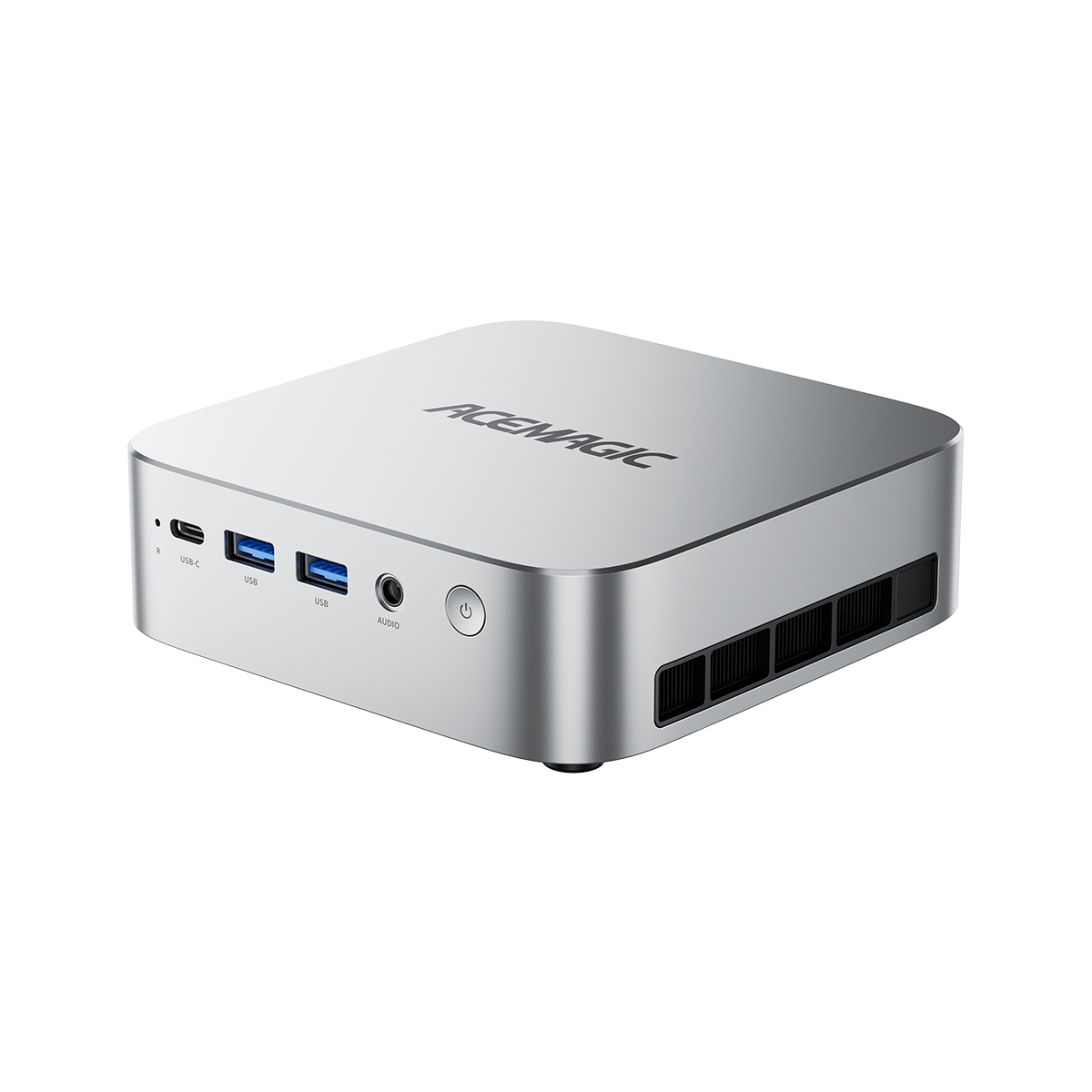
ACEMAGIC F5A AI Mini PC
- Processor: AMD Ryzen AI 9 HX 370
- AI Performance: 50 TOPS NPU
- Target User: Ideal for space-constrained home offices requiring local AI execution without the footprint of a desktop tower.

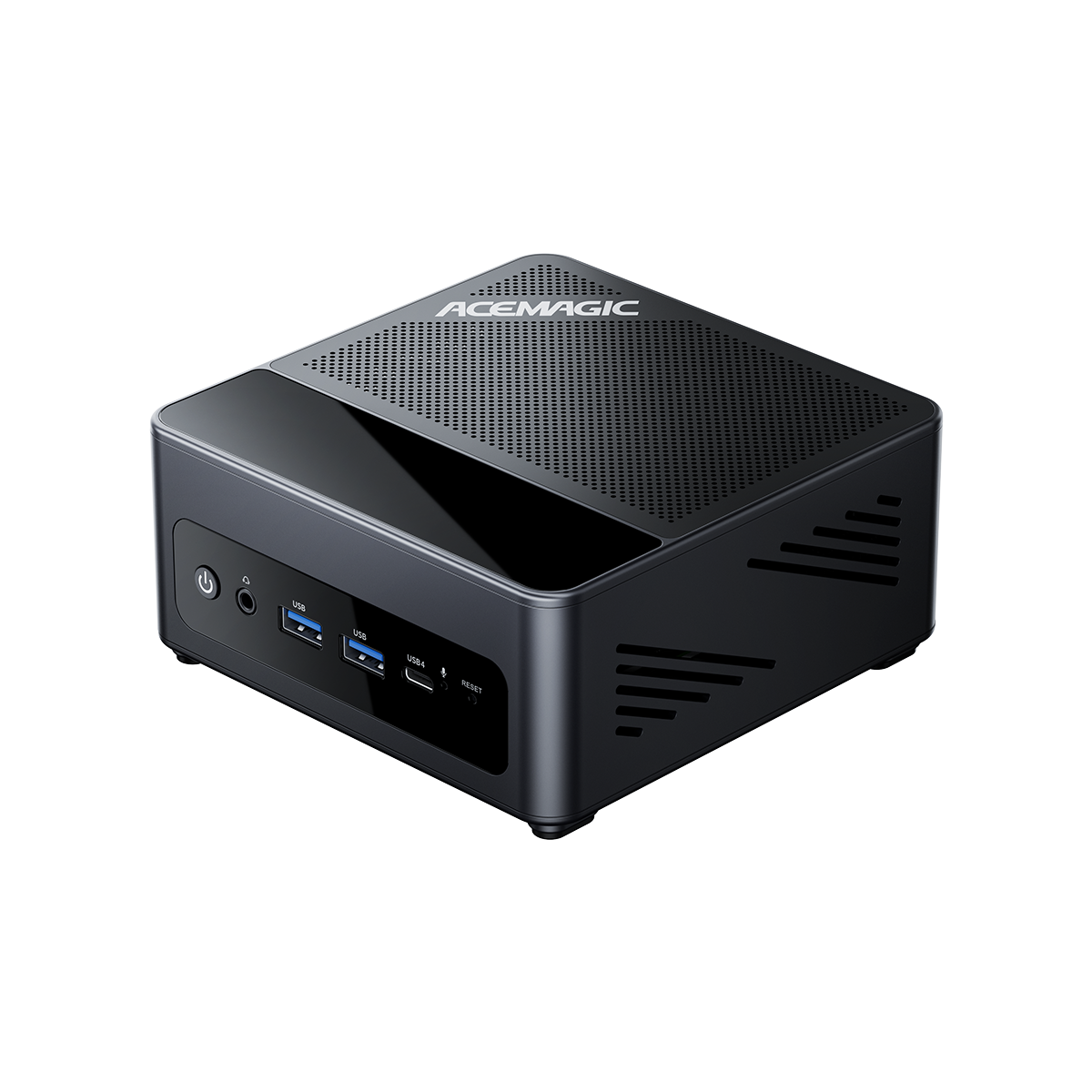
ACEMAGIC M1A Pro+ AI Mini PC
- Processor: AMD Ryzen AI 395+
- Architecture: XDNA 2 NPU Architecture
- Target User: Built for mobile professionals who run complex creative suites and on-the-go data analysis.
Frequently Asked Questions About NPUs
Does an NPU replace a GPU?
No. A GPU renders graphics and video game environments. An NPU processes machine learning tasks. The two components operate simultaneously on different mathematical workloads.
Can an NPU improve gaming performance?
Yes, in specific scenarios. Technologies like AMD FidelityFX Super Resolution utilize machine learning to uprate frame rates. The NPU handles this calculation. The system then frees the GPU to render the core game assets.
How do I check my NPU usage?
Windows 11 Task Manager displays NPU utilization under the "Performance" tab, alongside CPU and RAM metrics.