
What is LLM? A Beginner's Guide to Large Language Models

A Large Language Model (LLM) is a neural network trained to process and generate text. This guide outlines how LLMs function, the differences between cloud and local deployment, and the exact hardware specifications required to run these models on a personal computer.
What is a Large Language Model (LLM)?
An LLM is a software program built on a neural network architecture. It processes text inputs and calculates the probability of word sequences to construct responses. Researchers train these models using datasets containing terabytes of text from books, articles, and websites.
Popular Examples of LLMs
Modern AI chatbots rely on specific underlying models. The tools you use daily are powered by different LLM architectures:
- ChatGPT: Uses models built by OpenAI (such as GPT-4o).
- Claude: Uses models developed by Anthropic (such as the Claude 3.5 family).
- Gemini: Uses models built by Google (such as Gemini 1.5 and Gemini 2.0).
How Do Large Language Models Work?
Training Data and Neural Networks
Developers feed text datasets into a computing system structured mathematically to process information. During this training phase, the model maps grammar rules, factual relationships, and reasoning patterns. This initial process requires server farms equipped with thousands of enterprise graphics processing units (GPUs).
Predicting the Next Word
When you type a prompt, the LLM does not retrieve a pre-written answer from a database. It analyzes your text and predicts the most statistically probable next word, one at a time. This continuous sequence of predictions forms the sentences and paragraphs displayed on your screen.
Cloud-Based vs. Local LLMs: Which is Better?
Most consumers use cloud-based LLMs through a web browser. The processing occurs on remote servers. A local LLM is a model you download and run entirely on your own computer hardware.
| Feature | Cloud-Based LLM | Local LLM |
| Data Privacy | Provider processes your inputs on their servers. | Data remains strictly on your local device. |
| Cost | Often requires a monthly subscription fee. | Free (open-source models have zero query fees). |
| Internet Access | Required to function. | Operates 100% offline after the initial download. |
| Hardware Dependency | Runs on standard phones or basic laptops. | Requires specific RAM capacity and processors. |
Hardware Requirements to Run an LLM Locally
Running a local AI model shifts the computational workload from a remote server to your personal computer.
Why RAM is the Most Important Factor
Random Access Memory (RAM) dictates the size of the model your computer can load. An LLM file must fit entirely into system memory or Video RAM (VRAM) to function.
- 8GB RAM: Runs small models (1 to 3 billion parameters).
- 16GB RAM: Runs standard open-source models (7 to 8 billion parameters).
- 32GB RAM or more: Required for larger models (13 to 70 billion parameters) and higher text generation speeds.
The Role of CPU, GPU, and NPU
The processor calculates the text generation. A standard Central Processing Unit (CPU) can run LLMs, but text generation is slow (often 1 to 5 words per second). A Graphics Processing Unit (GPU) handles parallel tasks effectively, increasing generation speed to 20 to 50 words per second.
A Neural Processing Unit (NPU) provides dedicated hardware for AI mathematical tasks while consuming less power than a GPU. Processors with high NPU computing power (measured in TOPS - Trillions of Operations Per Second) process text generation faster.
Can a Mini PC Run a Large Language Model?
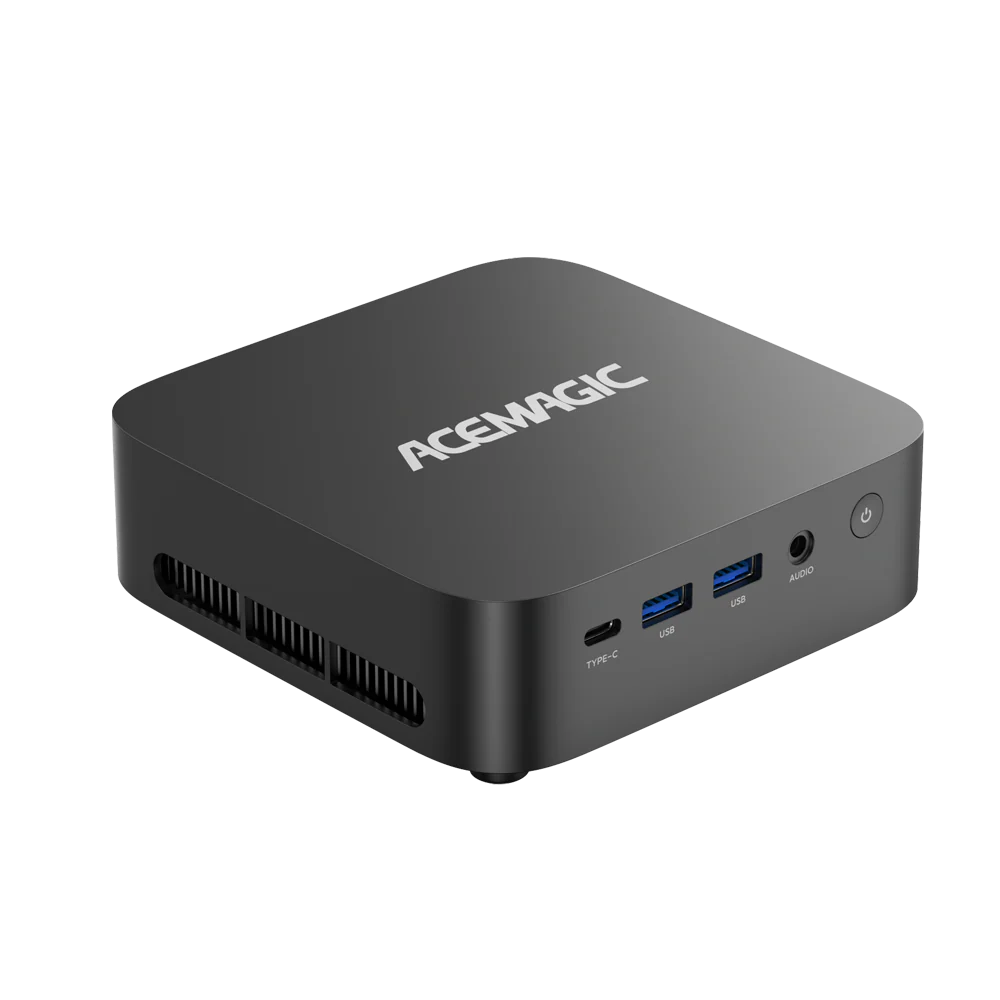
A large desktop tower is not mandatory for local AI deployment. A Mini PC configured with adequate RAM and a modern AI processor handles local LLMs efficiently.
Benefits of a High-Performance Mini PC
Modern Mini PCs use laptop-grade or efficient desktop-grade processors with integrated NPUs. A Mini PC equipped with 32GB of DDR5 RAM and an AI-focused processor occupies less than 2 liters of desk space. It consumes between 15W to 65W of power during operation, compared to a standard desktop PC which often exceeds 300W under heavy computational load. This allows you to leave an AI model running in the background without excessive electricity consumption.
To run models like Llama 3.1 or Mistral smoothly, you need specific hardware. Here are two examples of Mini PCs configured for local AI workloads:
For Standard Local AI:

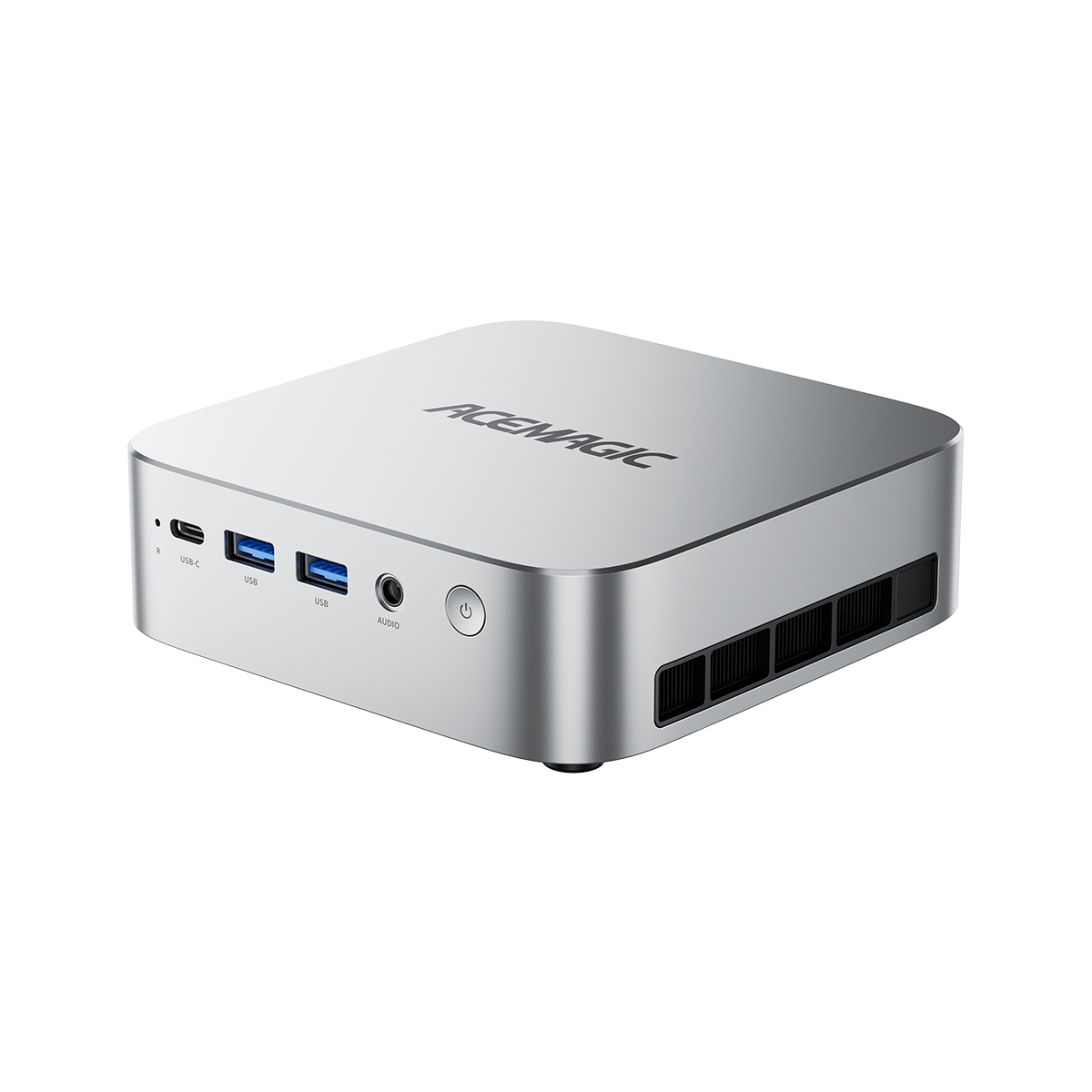
ACEMAGIC F5A Mini PC
- Specs: AMD Ryzen™ AI 9 HX 370 Processor (80 TOPS), 32GB DDR5 5600MHz RAM.
- Use Case: The 32GB RAM capacity meets the requirement to load 7B to 8B parameter models. The integrated NPU handles AI math efficiently. It also features an OCuLink port, allowing users to connect an external desktop GPU if more Video RAM is required later.
For Advanced Developers:

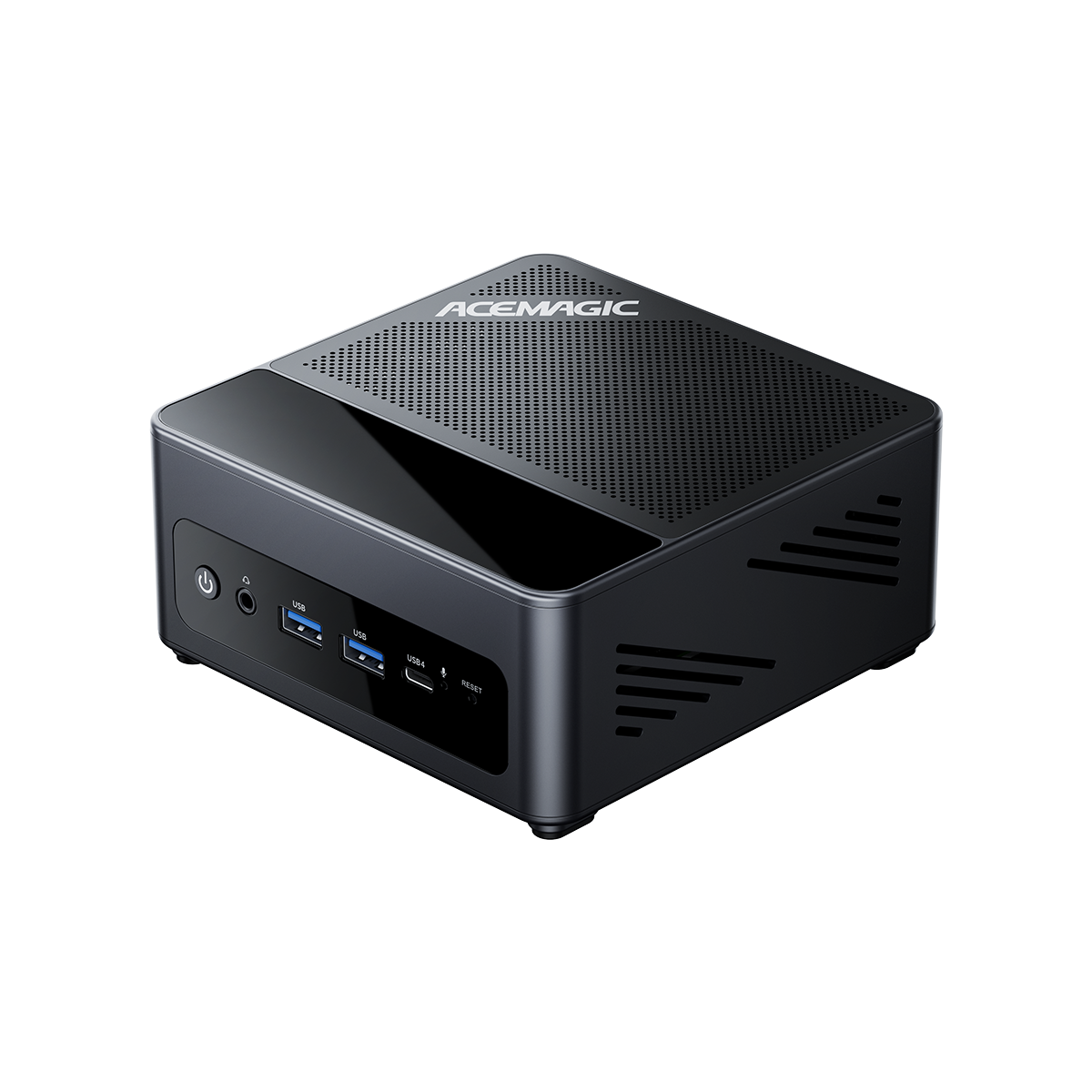
ACEMAGIC M1A PRO+ Mini PC
- Specs: AMD Ryzen™ AI Max+ 395 Processor (126 TOPS), 128GB LPDDR5x 8000MT/s RAM.
- Use Case: Built for researchers and developers. The 128GB unified memory architecture provides the capacity needed to load significantly larger LLMs (up to 70B parameters) locally without relying on cloud servers. The 8000MT/s memory bandwidth increases data exchange speed, reducing latency in text generation.
Top Open-Source LLMs You Can Run at Home
To run an LLM on your Mini PC, you need a software interface to load the model files. Popular options include LM Studio, Ollama, and OpenClaw. These applications provide a user interface to manage your models and interact with them offline.
Once your software is ready, you can download these widely used open-source models:
Meta Llama 3.1 and 3.2
Meta's Llama series sets the standard for open-source AI. The 8B parameter version requires about 8GB of RAM. It handles coding, writing, and data extraction tasks efficiently on mid-range hardware.
Mistral and Phi Series
Mistral models (such as Mistral NeMo) provide fast text generation speeds. Microsoft’s Phi models (like Phi-3.5 and Phi-4) are highly optimized for efficiency. They require minimal RAM to operate, making them suitable for entry-level Mini PCs with limited system memory.
FAQ: Frequently Asked Questions About LLMs
What does LLM stand for in AI?
LLM stands for Large Language Model. It is an algorithm trained on extensive text datasets to process, translate, and generate human language.
What is the difference between AI and an LLM?
Artificial Intelligence (AI) is the broad field of computer science dedicated to creating intelligent systems. An LLM is one specific type of AI designed exclusively for text and language tasks.
Is 16GB of RAM enough to run an LLM?
Yes. 16GB is generally the starting point for running local LLMs, and it can handle models with around 7B–8B parameters, such as Llama 3.1 8B or Mistral 7B. For larger models or heavier workloads, 32GB or more is recommended.
Can I run an LLM without an internet connection?
Yes. Once you download the model files and the necessary software (like OpenClaw or LM Studio) to your local storage drive, the system processes all prompts offline.
Are local LLMs free to use?
Yes. Open-source models like Llama 3.1, Mistral, and Phi have no subscription fees and no cost per query.
How do I check my PC specs to see if it can run an AI model?
In Windows, press Ctrl+Shift+Esc to open the Task Manager. Click the Performance tab to view your exact CPU model, total Memory (RAM) capacity, and GPU specifications.