
Best Mini PC for OpenClaw: AI Agents, Ollama & Local LLM Hardware Guide

Running the OpenClaw framework locally avoids the high cloud API costs that drain budgets for developers testing autonomous agents. But shifting the computational load from cloud servers to your local network requires specific hardware.
Continuous AI inference causes standard laptops to overheat rapidly. Operating an AI agent 24/7 demands a dedicated machine equipped with a Neural Processing Unit (NPU) or high memory bandwidth to handle matrix multiplication at low wattage.
Here is a breakdown of the exact hardware specifications you need to deploy OpenClaw reliably, comparing dedicated AI servers powered by AMD Ryzen AI processors.
Why AI Agents Are Moving From Cloud to Local Hardware in 2026
AI is moving beyond simple chat assistants. The next generation of AI applications is powered by AI agents that can understand goals, make decisions, use tools, and complete tasks with minimal human input.
Unlike traditional AI chatbots that only respond when prompted, autonomous AI agents are designed to work continuously in the background. They can monitor files, analyze data, automate workflows, write code, and manage repetitive tasks.
However, running AI agents entirely through cloud services can create several limitations. API costs can increase quickly with frequent usage, sensitive data may need to be uploaded to external servers, and users have limited control over how their AI workflows operate.
This is why more users are turning to local AI solutions. A dedicated Mini PC can act as a personal AI server, allowing AI agents to run 24/7 with lower long-term costs, improved privacy, and greater customization.
For OpenClaw users, local hardware provides the foundation needed to keep autonomous workflows running continuously. OpenClaw manages the agent tasks, while the local AI model provides the intelligence behind those tasks.
Why Your Main Laptop Cannot Run OpenClaw 24/7
Autonomous agents operate in continuous loops. They monitor directories, parse data, and execute scripts in the background indefinitely. Consumer laptops are built for burst performance, not sustained 100% computational loads over a 24-hour period.
The Problem with Sleep Mode and Thermal Throttling
Running continuous AI inference workloads puts immense stress on consumer hardware. When gaming laptops or MacBooks run local LLMs at maximum utilization, their CPUs frequently hit 95°C (203°F). Sustained high temperatures trigger thermal throttling. Your OS deliberately slows down the processor to prevent hardware damage, reducing your agent's execution speed from 30 tokens per second to under 5.
Furthermore, laptops are governed by aggressive power management. Close the lid, and the OS suspends your RAM state. This immediately kills the OpenClaw background process and wipes out any ongoing automated workflows.
The Dedicated Background Server
To maintain uninterrupted automation, the industry standard is to offload agents to a dedicated, headless server (a PC running without a monitor).
| Metric | Main Laptop | Dedicated Mini PC Server |
| Uptime | Intermittent (dies on sleep mode) | 24/7 Continuous Operation |
| Power Draw | 90W - 150W (under load) | 15W - 35W (background inference) |
| Thermal State | Throttles under sustained load | Stable, engineered for constant processing |
OpenClaw + Ollama: What Hardware Do You Need for Local AI Agents?
OpenClaw requires a local Large Language Model (LLM) to act as its logic engine. This local model dictates your physical memory and processing requirements.
How OpenClaw Works With Local AI Hardware
Running OpenClaw locally requires three key components working together:
1. Agent Framework
OpenClaw manages tasks, workflows, tool usage, and automation logic.
2. Local LLM Runtime
Tools like Ollama allow users to run large language models directly on their own hardware instead of depending on cloud APIs.
3. Computing Hardware
The Mini PC provides the CPU performance, memory capacity, storage speed, and AI acceleration required for smooth operation.
Memory Requirements for Local LLMs
An 8-billion parameter model (like Llama 3 8B) quantized to 4-bit precision requires about 6GB of RAM just to load the weights. Your operating system needs 4GB. OpenClaw needs additional memory to maintain its context window.
If your system runs out of physical RAM, it offloads memory to your storage drive (swapping). Swapping drops inference speed by over 90%, causing the agent to stall. 16GB of RAM is the absolute floor. 32GB is the realistic baseline for responsive agent execution.
Why NPU Matters for 24/7 AI Agent Workloads
Standard CPUs handle sequential math. Forcing a CPU to process the heavy matrix multiplication required by LLMs spikes power consumption above 65 watts, causing significant thermal output.
A Neural Processing Unit (NPU) is specialized silicon built exclusively for AI math. Routing AI tasks through an NPU drops power consumption to under 15 watts while maintaining high token generation speeds. For a machine running 24/7, an NPU keeps the fan noise minimal and your electricity bill low.
AI Workflow Automation: What Can a Local AI Agent Do
The biggest advantage of running OpenClaw locally is enabling continuous AI workflow automation without relying on cloud services or manual operation.
A local AI agent can help with:
Personal Productivity
A personal AI assistant can:
- Summarize documents and reports
- Organize files and knowledge
- Automate daily tasks
Developer Automation
AI agents can:
- Generate and review code
- Run testing workflows
- Debug repetitive tasks
Data & Business Workflows
Local AI agents can:
- Analyze documents and datasets
- Monitor files and generate reports
- Support internal knowledge assistants and customer workflows
Unlike laptops that may enter sleep mode or suffer from thermal throttling, a dedicated Mini PC provides stable 24/7 operation for AI agents and automation tasks.
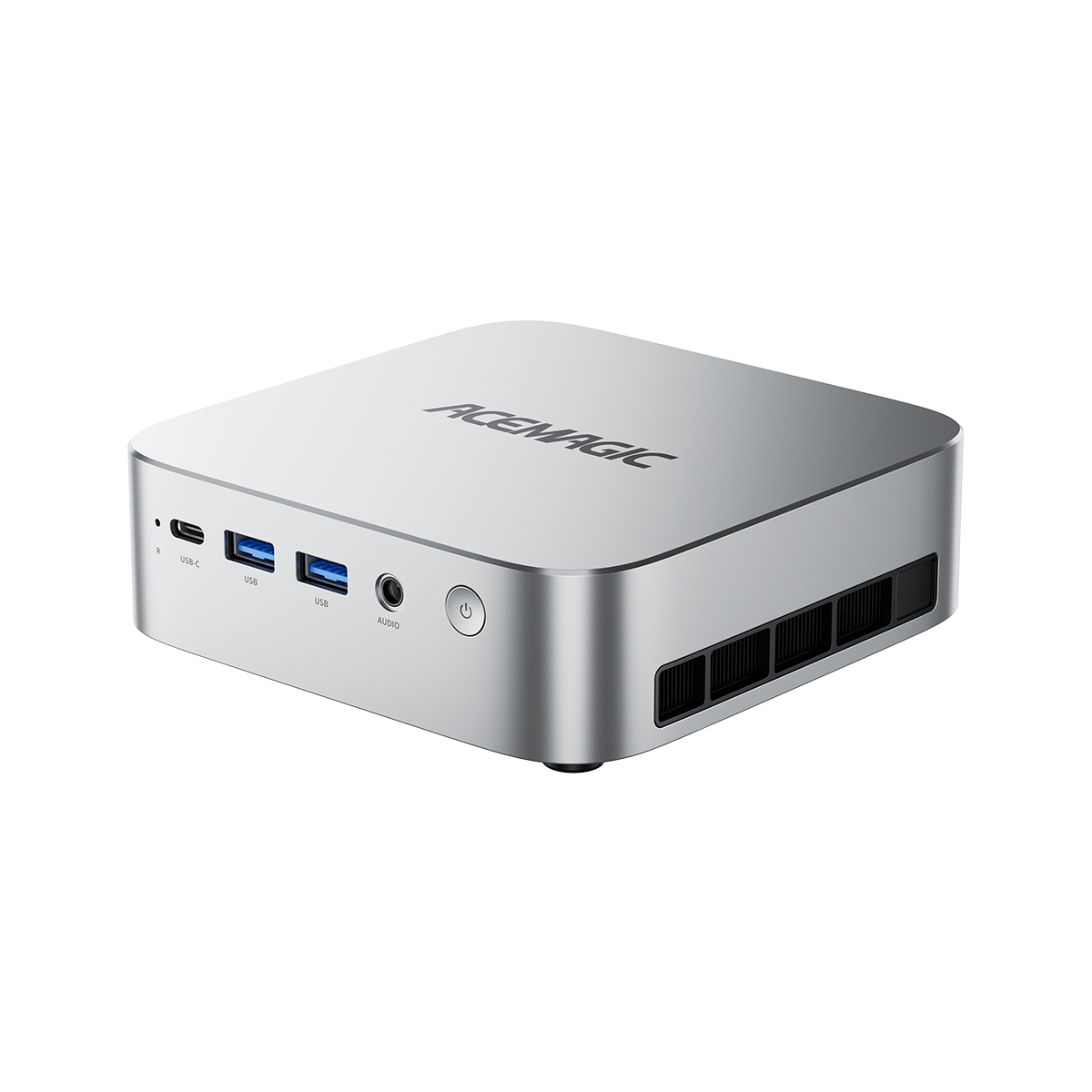
ACEMAGIC F5A: The 24/7 Agent Companion
For users configuring OpenClaw to handle administrative tasks, web scraping, and file management, the ACEMAGIC F5A provides the exact NPU architecture needed for continuous operation.
80 TOPS of AI Power for Background Automation
The F5A runs on the AMD Ryzen AI 9 HX 370 processor, delivering up to 80 TOPS of total computing power, with a dedicated 50 TOPS NPU.
Because the NPU handles the LLM inference independently, OpenClaw can read emails and execute Python scripts quietly in the background. The primary CPU cores stay idle. Dual smart cooling fans and an SSD cooling vest prevent the fans from spinning up to maximum RPM, keeping the unit quiet on your desk.
OCuLink and Hardware Expandability
Unlike closed systems, the F5A includes an OCuLink port. If you plan to train your own models later, you can plug an external desktop RTX graphics card directly into the F5A without the bandwidth bottlenecks of Thunderbolt. Combined with Wi-Fi 7 and Dual 2.5G LAN ports, it handles intensive data scraping workflows efficiently.

ACEMAGIC F5A Mini PC
A compact AI system designed to run automation agents and background workflows reliably.
- AMD Ryzen™ AI 9 HX 370 CPU
- 32GB RAM+1TB SSD / Barebones
- OCULink support
- Efficient Dual-Fan Cooling System
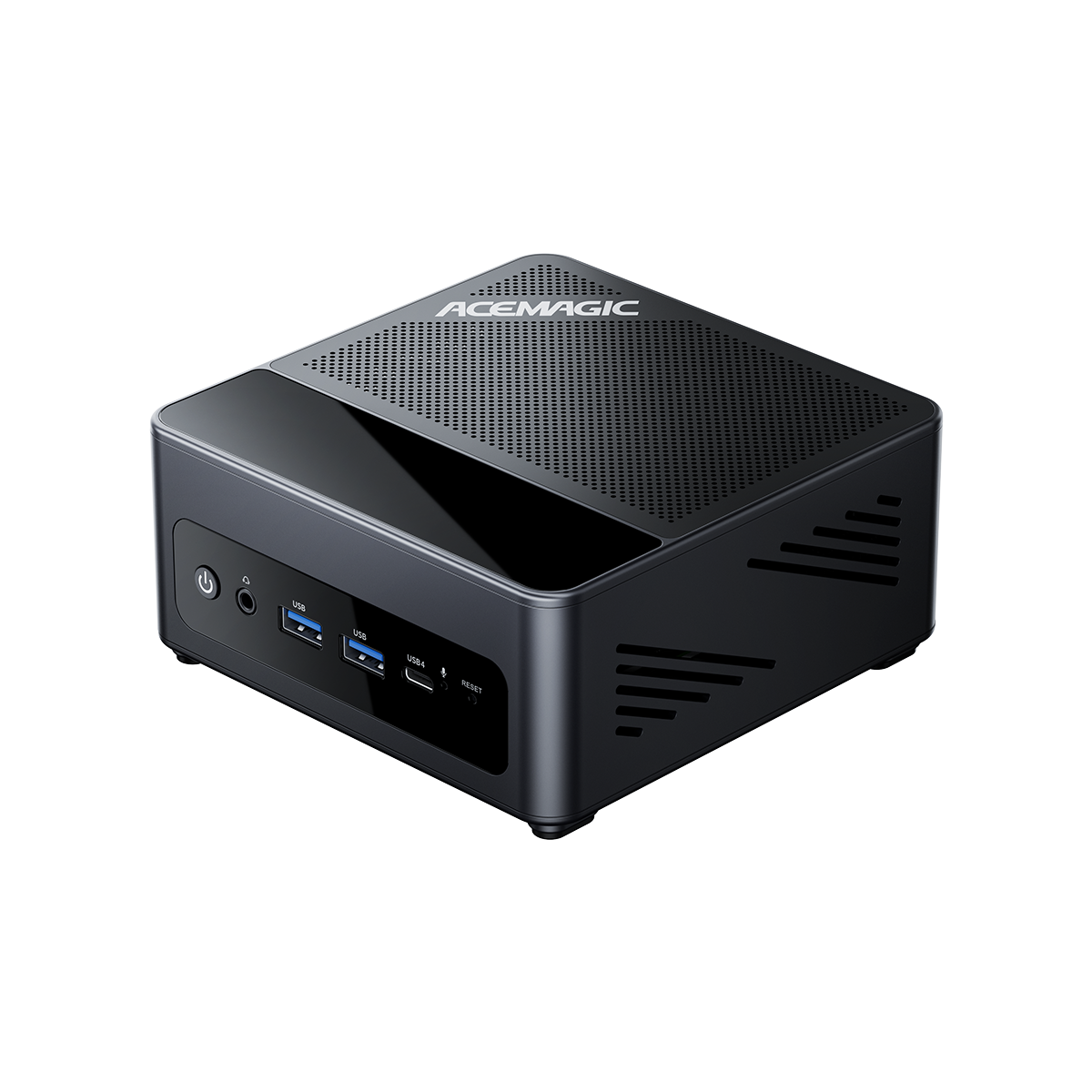
ACEMAGIC M1A PRO+: The Local AI Workstation
Developers requiring Multi-Agent collaboration (multiple OpenClaw instances communicating) or those deploying 70-billion parameter models need workstation-grade memory bandwidth. The ACEMAGIC M1A PRO+ is built specifically for this heavy workload.
128GB of 8000MT/s RAM: Maximum Bandwidth
Memory bandwidth dictates how fast an AI model generates text. The M1A PRO+ features 128GB of LPDDR5x memory running at 8000MT/s.
This CPU and GPU share a unified memory pool. 128GB allows you to load 70B parameter models entirely into RAM with zero swapping. This provides the performance of high-end desktop rigs but packed into a footprint the size of a soccer ball.
126 TOPS and Advanced Thermal Control
Powered by the AMD Ryzen AI MAX + 395 and a Radeon 8060S GPU, the system hits 126 TOPS of total AI performance.
Running three concurrent AI instances for software development (Agent A coding, Agent B testing, Agent C committing) generates substantial heat. The M1A PRO+ manages this with five copper pipes for the GPU, two for the CPU, and triple turbine fans, increasing cooling efficiency by 45% to sustain coding workflows 24/7.

ACEMAGIC M1A PRO+ Mini PC
A powerful local AI workstation for large models and multi-agent development.
- AMD Ryzen™ AI Max+ 395 CPU
- 128GB 8000MHz + 2TB PCIe 4.0 SSD
- up to 140 W of Power
- Triple-Fan Deep-Freeze System
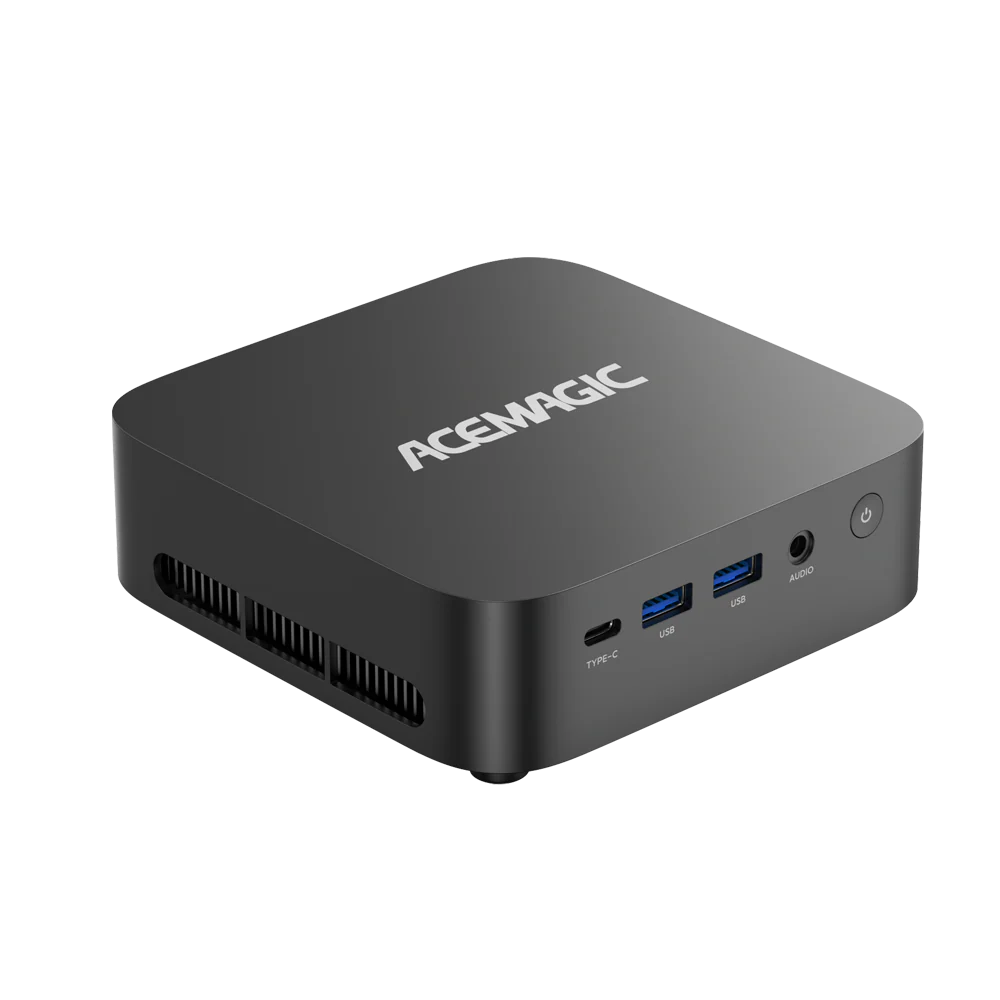
ACEMAGIC Retro X5: The Plug-and-Play OpenClaw Edition
Configuring local environments, installing dependencies, and linking APIs can be tedious. For users who want to skip the command line entirely, the ACEMAGIC Retro X5 ships with the OpenClaw framework and local LLM environments pre-installed. It utilizes the same AMD Ryzen AI 9 HX 370 processor as the F5A but is packaged in a classic console design with upgraded thermals.
Pre-Installed Automation
Out of the box, the Retro X5 bypasses the standard Node.js and Python setup phases. You boot the system, open the interface, and immediately start assigning tasks to your local agent. The unit is equipped with 32GB of high-frequency DDR5 memory (5600 MT/s) and a 1TB PCIe 4.0 SSD, providing the exact hardware specifications required to run 8B to 14B parameter models without memory swapping.
Cooling Architecture for Dual Workloads
When you are not running OpenClaw workflows, the system functions as a highly capable gaming machine. To handle both sustained AI inference and heavy gaming, it features five copper pipes for the GPU, two for the CPU, and triple turbo fans. This architecture keeps the system 45% cooler under load compared to standard mini PCs.
Ready to skip the setup process and start automating immediately?
[The ACEMAGIC Retro X5 OpenClaw Edition is launching soon. Stay tuned to our official website for the latest updates.]
Side-by-Side Comparison
| Specification | ACEMAGIC F5A | ACEMAGIC M1A PRO+ | ACEMAGIC Retro X5 |
| Processor | AMD Ryzen AI 9 HX 370 | AMD Ryzen AI MAX + 395 | AMD Ryzen AI 9 HX 370 |
| Total AI Power | Up to 80 TOPS | Up to 126 TOPS | Up to 80 TOPS |
| Memory | Barebone / Up to 128GB | 128GB 8000MT/s LPDDR5x | 32GB DDR5 5600MHz |
| Software | Requires Manual Setup | Requires Manual Setup | Provide OpenClaw Pre-installed edition |
| Cooling | Dual fans + SSD Vest | Triple turbine fans + 7 Copper Pipes | Triple turbo fans + 7 Copper Pipes |
| Best For | Everyday Automators | Hardcore Developers, Multi-Agent | Plug-and-Play AI Users & Gamers |
How to Set Up Your ACEMAGIC Mini PC for OpenClaw
(Note: If you purchased the Retro X5 OpenClaw Edition, steps 2 and 3 are already completed for you. Simply power on the device and launch the agent.)
For the F5A and M1A PRO+, follow these hardware preparation steps before diving into the core software installation. The systems arrive with Windows 11 Pro pre-installed.
1. Connect and Update Hardware Drivers:
Plug in the PC and connect to your network via Wi-Fi 7 or the 2.5G LAN. Run Windows Update to ensure all AMD NPU drivers are current so OpenClaw can utilize the hardware effectively.
2. Prepare the Operating Environment:
While OpenClaw supports multiple operating systems, it runs exceptionally well on Windows 11 via the Windows Subsystem for Linux (WSL2). You will also need to download a local LLM application like LM Studio or Ollama. These free applications act as the server for your local AI model, allowing you to bypass expensive cloud APIs.
3. Install OpenClaw:
Because configuring the command line and linking your local LLM requires specific terminal commands, we have created a dedicated, step-by-step tutorial for you.
👉 Read our [Complete OpenClaw Installation & Setup Guide] to walk through the terminal setup, configure your model, and deploy your first autonomous agent.
FAQ
Do I need a desktop GPU to run OpenClaw locally?
No. While discrete GPUs process AI faster, modern Mini PCs equipped with AMD Ryzen AI NPUs and high-bandwidth RAM process local agent workflows efficiently without the large physical footprint and 300W+ power draw of a desktop graphics card.
Can OpenClaw run with Ollama locally?
Yes. OpenClaw can work with local LLM platforms such as Ollama.
In this setup, Ollama provides the AI model inference, while OpenClaw manages automation workflows, tools, and agent tasks.
This combination allows users to build a private AI agent system without relying completely on cloud APIs.
Why shouldn't I just use my MacBook or gaming laptop?
Agents take time to complete complex tasks. If your laptop enters sleep mode, the task terminates immediately. Running agents constantly drains laptop batteries and causes severe thermal throttling, degrading the internal components.
What is an NPU and why does it matter?
An NPU (Neural Processing Unit) is a specialized chip built directly into processors like the AMD Ryzen AI series. It processes AI matrix math using highly efficient silicon pathways, keeping the Mini PC quiet, cool, and energy-efficient during 24/7 background tasks.
How much RAM is required for Multi-Agent tasks?
Running multiple OpenClaw instances requires at least 32GB of RAM. Power users deploying 32B or 70B parameter models require high memory capacity configurations, which is why systems like the M1A PRO+ feature 128GB of LPDDR5x RAM.
Can I leave the ACEMAGIC F5A or Retro X5 running 24/7 safely?
Yes. Both systems utilize high-efficiency AMD mobile architecture and advanced cooling systems designed to process background tasks continuously without exceeding safe thermal limits.
Will OpenClaw work on Windows 11?
Yes. OpenClaw operates natively on Windows 11 via the command line or through the Windows Subsystem for Linux (WSL). ACEMAGIC AI Mini PCs support direct installation of these environments out of the box.
What is the best Mini PC for running Ollama?
Ollama performance depends mainly on RAM capacity, processor efficiency, storage speed, and AI acceleration.
For basic local models, 16GB RAM can work. However, 32GB RAM provides a better experience for running AI agents because it leaves enough memory for the operating system, model context, and background tasks.