
Intel Core Ultra 5 vs Core i7: Architecture and Performance Comparison

Introduction to Intel's Naming Convention
Intel transitioned from the "Core i" series to the "Core Ultra" series starting with the Meteor Lake architecture and continuing through the Arrow Lake generation. The Core i7 represents the high-performance tier of the 13th and 14th-generation architectures, whereas the Core Ultra 5 represents the mid-range tier of the newer architecture. This structural change involves a shift from a monolithic silicon die to a tiled (chiplet) design, utilizing 3D packaging technology to separate different functional blocks onto independent tiles.
Core Architecture: Hybrid Cores and the NPU
Both CPU families rely on a hybrid architecture, combining Performance Cores (P-Cores) for active workloads and Efficiency Cores (E-Cores) for background tasks.
Core i7 processors (such as the i7-13700H or i7-14700K) feature a high total core count and high clock frequencies, prioritizing raw computational throughput.
The Core Ultra 5 introduces two specific structural changes:
- Low-Power Efficiency (LPE) Cores: Located on an independent low-power island, these cores manage idle states and media playback to reduce battery drain and base power draw.
- Neural Processing Unit (NPU): A dedicated hardware block processing specific artificial intelligence workloads locally. It handles tasks like background blur in video conferencing or localized language model processing, offloading these calculations from the main CPU and GPU to lower overall power consumption.
Integrated Graphics: Intel Arc vs. Intel Iris Xe
Older Core i7 processors use Intel UHD or Intel Iris Xe graphics. The Core Ultra 5 integrates Intel Arc graphics based on the Xe-LPG architecture.
Intel Arc supports hardware-accelerated ray tracing and AV1 video encoding and decoding. The integrated Arc module contains more Execution Units (EUs) and operates at higher clock speeds than Iris Xe. This yields higher frame rates in 3D applications and reduced export times in video editing software when utilizing hardware acceleration.
Power Efficiency and Thermal Management
Thermal Design Power (TDP) measures the heat a processor generates under load, directly impacting cooling requirements.
A standard mobile or desktop Core i7 operates with a base TDP ranging from 45W to 65W, with turbo power limits frequently exceeding 100W under load. Dissipating this heat requires substantial cooling hardware and high fan speeds.
The Core Ultra 5 operates at a lower base TDP, typically between 15W and 28W, with restricted turbo power limits. The tiled architecture and LPE cores allow the Ultra 5 to manage low-intensity tasks with minimal wattage. In compact computing environments, this translates to lower internal component temperatures and reduced thermal throttling.
Real-World Performance and Benchmarks
In multi-threaded synthetic benchmarks like Cinebench R24, a 13th or 14th Gen Core i7 scores higher than a Core Ultra 5 due to its higher core count and clock speeds. For single-core tasks, the i7 generally maintains a performance lead.
In tasks utilizing the integrated graphics or the NPU, the Core Ultra 5 shows specific advantages. Hardware-accelerated video encoding tests demonstrate the Ultra 5 completing AV1 file exports faster than an Iris Xe-equipped Core i7. Machine learning inference tests using the OpenVINO framework show lower CPU utilization and lower system power draw when processed through the Ultra 5's NPU.
Choosing the Right Processor for Your Workflow
Core i7 Workloads:
The Core i7 fits workflows requiring maximum multi-threaded CPU throughput. Examples include compiling large software codebases, running multiple virtual machines simultaneously, and executing complex CPU-based 3D modeling. It requires an environment that can accommodate higher heat output.

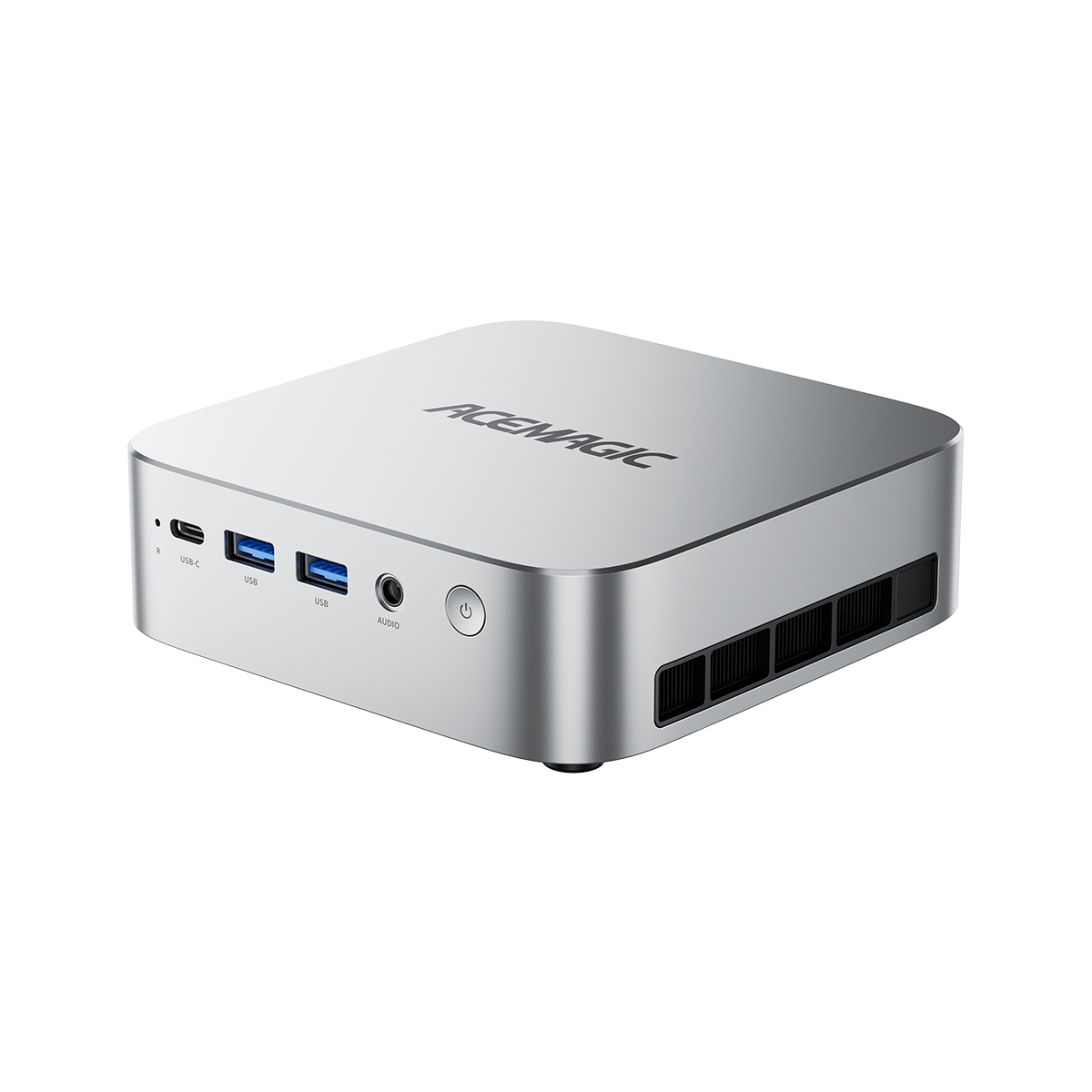
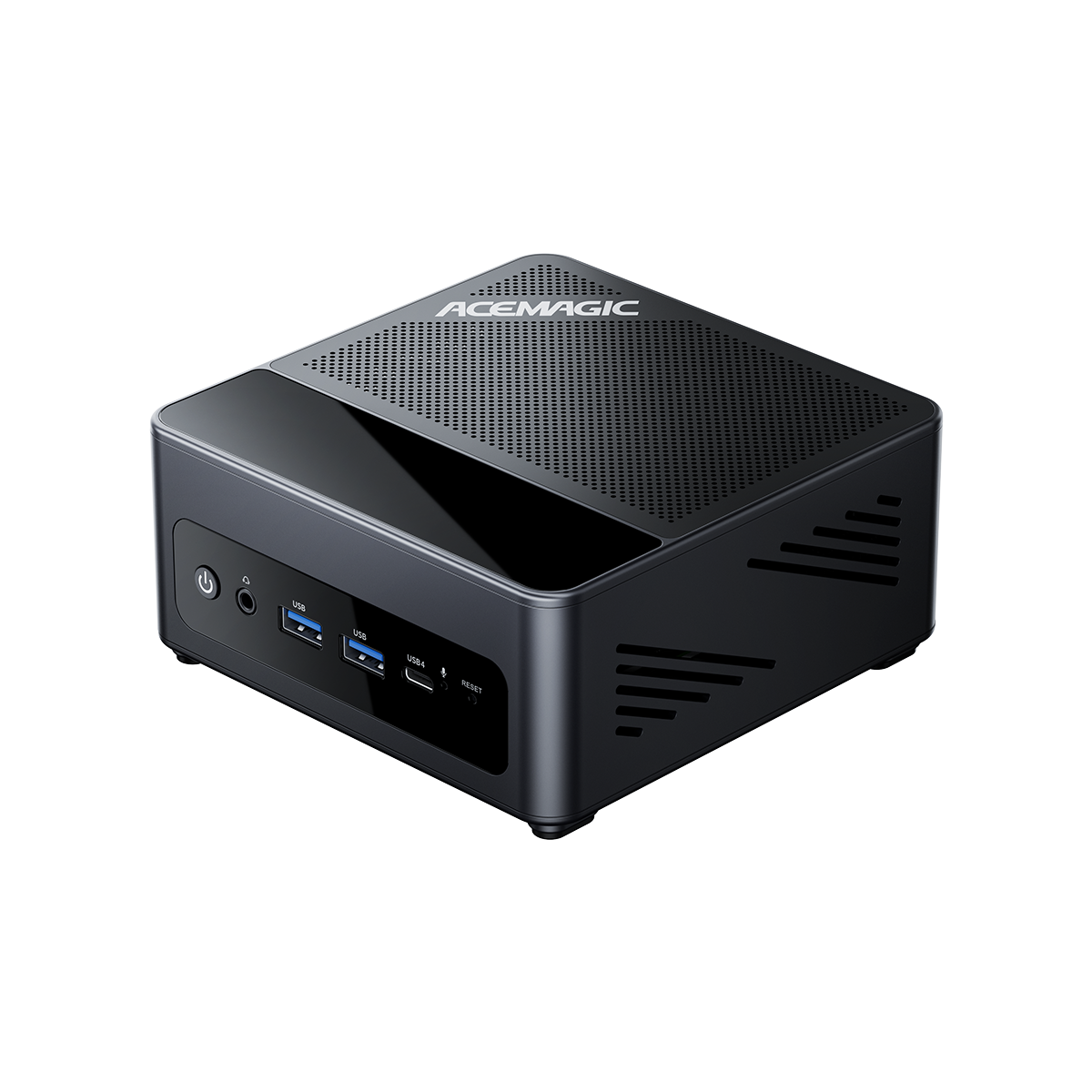
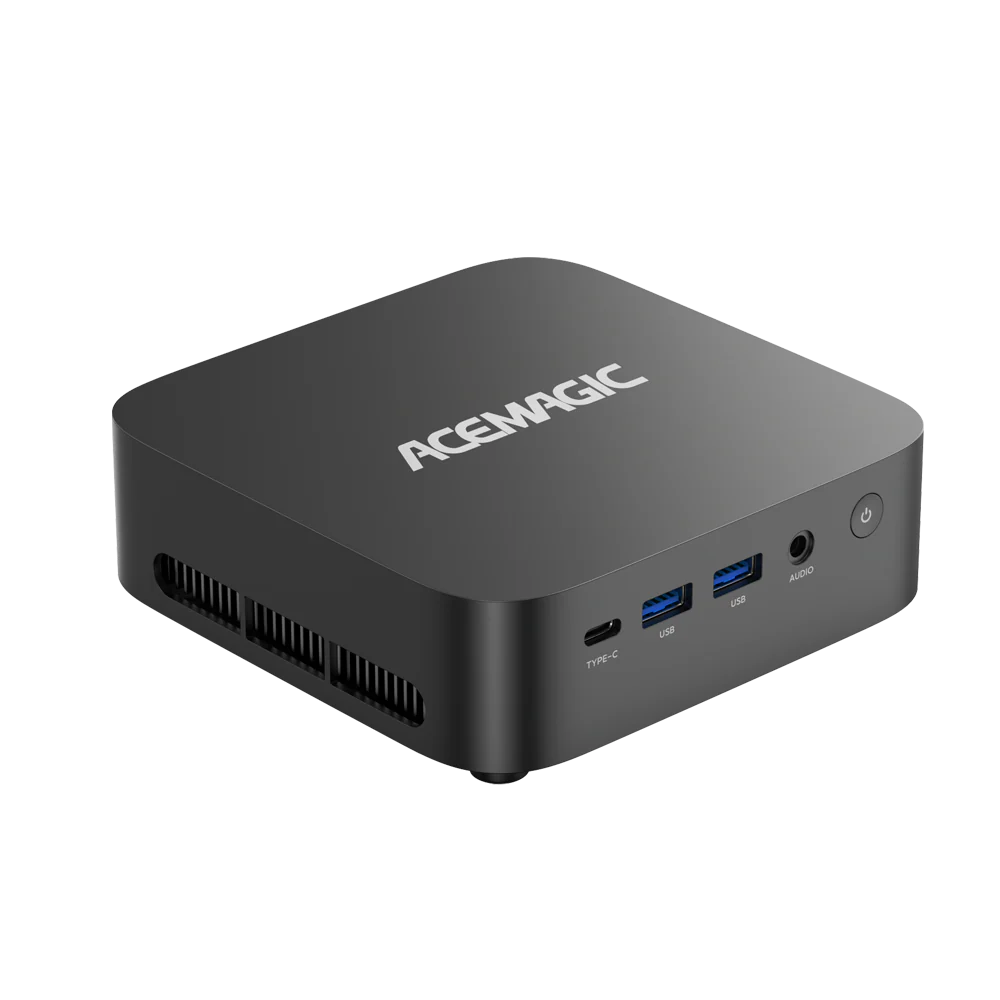
ACEMAGIC M5 Mini PC
Designed to accommodate the thermal and power requirements of the HX-series processor within a compact chassis, suitable for the high-intensity, multi-threaded CPU workloads described above.
- Intel® Core™ i9-14900HX / i7-14650HX CPU
- 32GB DDR4 3200MHz Dual Channel RAM
- 1TB M.2 NVMe PCIe 4.0 SSD
- WiFi 6E & Bluetooth 5.2 Support
Core Ultra 5 Workloads:
The Core Ultra 5 suits power-constrained or space-constrained environments. It handles workflows relying on hardware-accelerated media encoding, localized AI task processing via the NPU, and moderate 3D graphics rendering without a discrete graphics card.
FAQ
Is the Intel Core Ultra 5 faster than the Core i7?
For heavy multi-threaded CPU workloads, a 13th or 14th Gen Core i7 is faster due to higher clock speeds and core counts. The Core Ultra 5 is faster in specific graphical rendering and AI-accelerated tasks.
What does the NPU do in the Core Ultra series?
The NPU processes machine learning algorithms locally on the device. This reduces the processing load on the main CPU and GPU, which lowers power consumption during tasks like local AI inference or video background replacement.
Does the Core Ultra 5 run cooler under heavy workloads?
Yes. The Core Ultra 5 has a lower base TDP and a lower maximum turbo power limit compared to high-end Core i7 processors. This results in less heat generation under sustained processing loads.
Which processor consumes less idle power for a 24/7 home server?
The Core Ultra 5 consumes less idle power. Its distinct Low-Power Efficiency (LPE) cores handle background server tasks and idle states, resulting in a lower baseline power draw measured at the wall compared to a standard Core i7 running the same background processes.
Can either processor handle 1080p gaming without a discrete graphics card?
The Core Ultra 5, equipped with Intel Arc graphics, supports 1080p gaming at medium settings for many current titles. A Core i7 using older Iris Xe graphics will struggle to maintain playable frame rates in modern 3D games without significant resolution scaling.