
High-Performance Mini PCs for Digital Nomads: A 2026 Engineering Guide

Remote workers running local compilers, video renderers, or large language models face hardware throttling. Laptops restrict sustained performance due to thermal limits within a thin chassis. Mini PCs remove the battery and screen to allocate internal volume to cooling components. This structural change allows the hardware to maintain a constant Thermal Design Power (TDP) over extended periods of processing. This document evaluates two distinct hardware architectures, the ACEMAGIC F5A and M5, focusing on processing capability, I/O bandwidth, and storage configuration.
Thermal Headroom and Consistent TDP vs. Laptops
Laptops reduce clock speeds during continuous CPU or GPU loads to prevent overheating, a process known as thermal throttling. Mini PCs operate plugged directly into wall outlets at fixed locations such as rented apartments or co-working spaces.
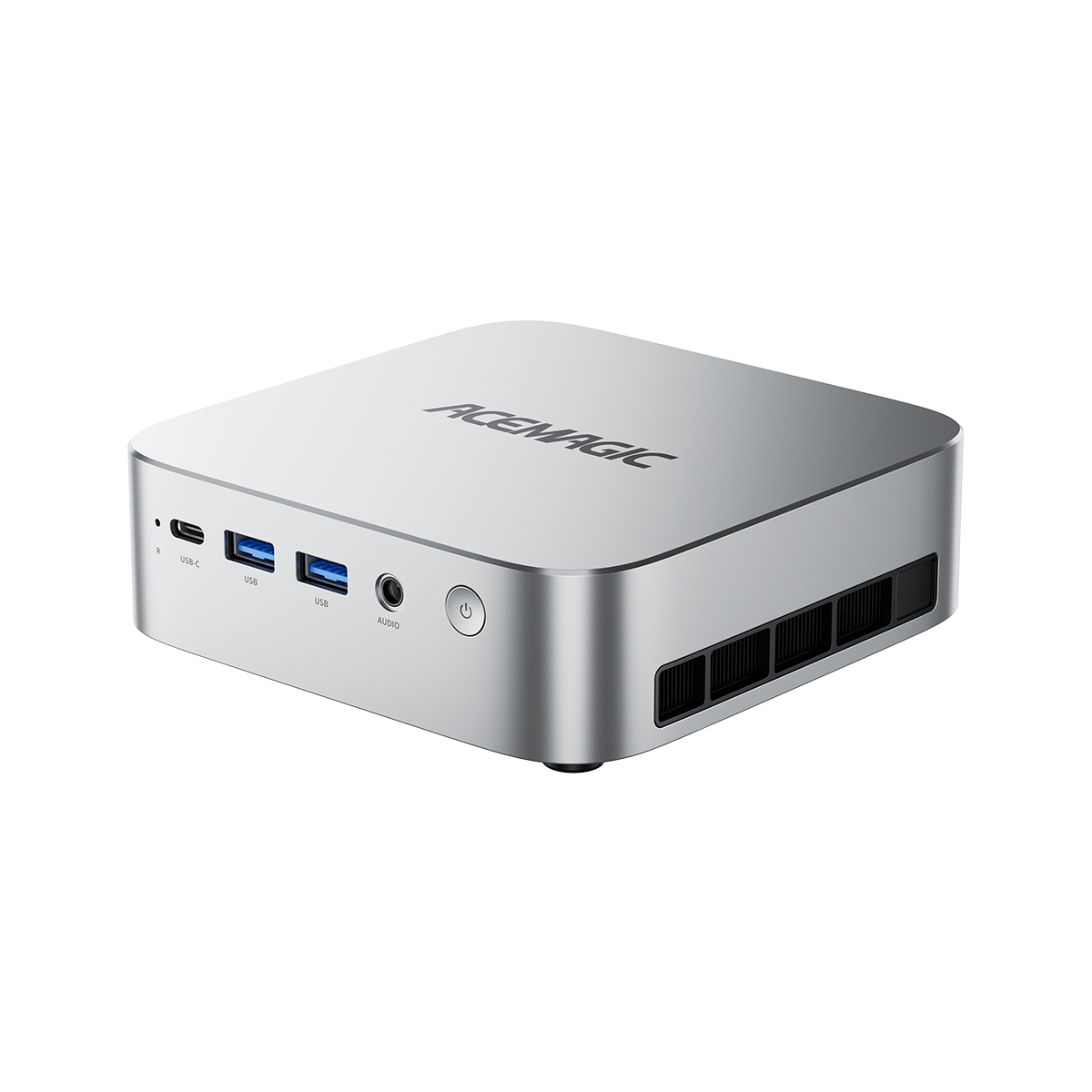
By eliminating the internal battery, devices like the ACEMAGIC F5A incorporate dual fans and vapor chamber heat spreaders. These specific components dissipate the heat generated by the processor, keeping the unit running at a sustained 65W TDP. This stable power draw ensures that tasks like video encoding or batch processing execute at consistent speeds without frequency drops.
Storage Architecture: Aligning Capacity with Nomadic Workflows
Storage requirements dictate the necessary hardware configuration. Selecting the correct drive capacity prevents overspending and ensures sufficient local read/write bandwidth.
512GB: The Cloud-Reliant Baseline
This capacity fits web developers relying on cloud-based repositories like GitHub or remote servers like AWS. A standard operating system and an Integrated Development Environment (IDE) occupy under 100GB. The remaining space acts as a local cache for active files.
1TB: The Standard Local Workspace
Both the ACEMAGIC F5A and M5 include a 1TB PCIe 4.0 x4 NVMe SSD. This is the baseline for local development. A 1TB drive holds the operating system, multiple IDEs, and local testing databases without limiting sequential read and write speeds.
2TB & Beyond: Heavy Media & Data Needs
Video editors and AI developers require high-bandwidth local storage to avoid the constraints of external USB drives. Writing 4K media directly on the internal PCIe 4.0 bus prevents dropped frames during playback. The ACEMAGIC F5A provides three M.2 NVMe slots, supporting a maximum configuration of 12TB.
ACEMAGIC F5A: The High-Bandwidth Visual & AI Mini PC
This machine targets 3D renderers, video editors, and developers running local AI agents.
Zen 5 Architecture and Heterogeneous Computing
The F5A operates on the AMD Ryzen AI 9 HX 470 processor, which contains 4 Zen 5 cores and 8 Zen 5c cores. The integrated Radeon 890M graphics unit features 16 Compute Units based on the RDNA 3.5 architecture to process hardware acceleration tasks in software like DaVinci Resolve. The processor includes an NPU utilizing the XDNA2 architecture. This NPU outputs 55 TOPS, contributing to 86 TOPS total system AI performance for local inferencing tasks.
I/O and Storage Expandability
The unit contains three internal M.2 NVMe slots (one PCIe 4.0 x4 and two PCIe 4.0 x2). For external data transfer, it provides two USB4 Type-C ports capable of 40Gbps and one dedicated OCuLink port. The OCuLink port provides a direct PCIe lane connection to external desktop GPU enclosures without the bandwidth loss associated with USB protocols.
100W Power Delivery in Temporary Setups
The USB4 ports support 100W Power Delivery (PD) input. Users can power the unit with a 100W Gallium Nitride (GaN) charger. This allows travelers to replace the standard DC adapter with a compact charger that also powers other mobile devices, reducing overall equipment weight.

ACEMAGIC F5A AMD Ryzen™ AI 9 HX 470 Mini PC
Step into the future with faster, smarter, and more secure AI performance. Streamline workflows, boost productivity, and unlock creativity.
- AMD Ryzen™ AI 9 HX 470 CPU
- 32GB LPDDR5X 8000MT/s + 1TB NVMe PCIe 4.0 SSD
- Up to 65 W of performance
- Dual-fan cooling + VC heat spreader
ACEMAGIC M5: The Multithreaded Processing Engine
This hardware configuration targets backend developers, system administrators, and data engineers running virtual machines (VMs) or Docker containers.
24 Cores of Computation
The M5 uses the Intel Core i9-14900HX processor with 24 cores and 32 threads. The high thread count accelerates parallel code compilation and batch processing tasks. The processor reaches a maximum turbo frequency of 5.8GHz for high-load single-core operations.
Memory Scaling for Virtualization
The unit is configured with 32GB of dual-channel DDR4 3200MHz RAM. It includes two SO-DIMM slots. Users can upgrade the hardware to 64GB to allocate memory to multiple local virtual environments and databases simultaneously.
Native Multi-Display Output
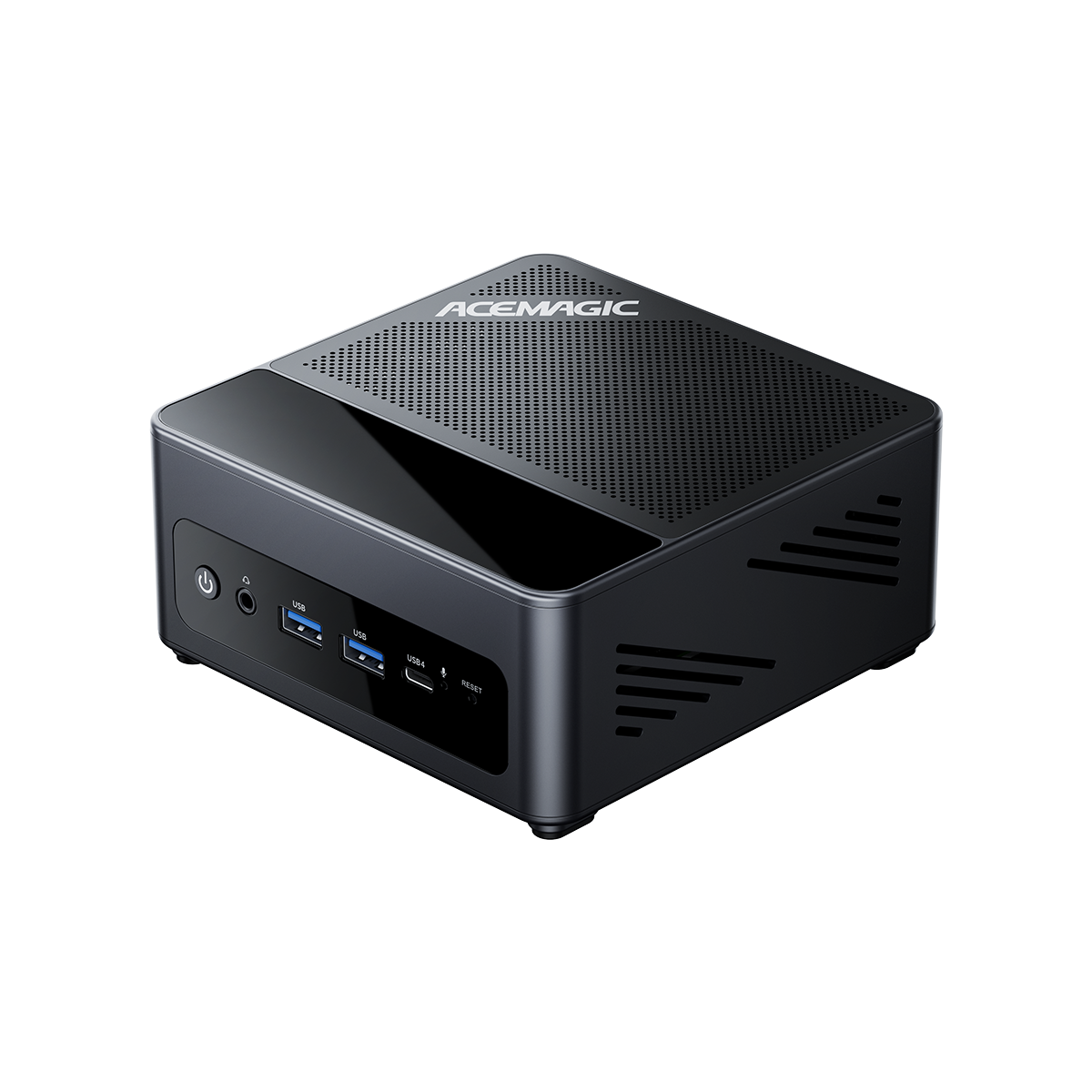
The M5 features one HDMI 2.0 port, one DisplayPort 1.4, and one USB-C 3.2 Gen 2 port. This configuration outputs to three physical 4K monitors at 60Hz. This supports setups requiring simultaneous viewing of code editors, terminal windows, and user interfaces.

ACEMAGIC M5 Mini PC
Designed to accommodate the thermal and power requirements of the HX-series processor within a compact chassis, suitable for the high-intensity, multi-threaded CPU workloads described above.
- Intel® Core™ i9-14900HX / i7-14650HX CPU
- 32GB DDR4 3200MHz Dual Channel RAM
- 1TB M.2 NVMe PCIe 4.0 SSD
- WiFi 6E & Bluetooth 5.2 Support
Verdict: Choosing the Right Architecture for Your Workload
Select the ACEMAGIC M5 for workloads requiring high thread counts for parallel compilation and memory capacity for local virtualization.
Select the ACEMAGIC F5A for workloads requiring NPU hardware acceleration, external GPU scaling via OCuLink, and high-bandwidth local storage expansion up to 12TB.
Review the hardware specifications to match the device with your specific rendering, compiling, or computing requirements.